Tuesday, July 1, 2014

Review - Ancillary Justice by Ann Leckie


Short review: Breq was the ship Justice of Toren, she was also One Esk and she had a favorite officer. One day she was betrayed and all but a tiny piece of her was destroyed. Now she searches an ice planet looking for a tool that will allow her to achieve vengeance.

Haiku
Justice of Toren
Destroyed and now only Breq
A gun and vengeance

Disclosure: I received this book as part of the LibraryThing Early Reviewers program. Some people think this may bias a reviewer so I am making sure to put this information up front. I don't think it biases my reviews, but I'll let others be the judge of that.

Full review: Ancillary Justice is, to put it bluntly, a brilliant science fiction novel that poses questions regarding identity, gender, and the nature of self. On the surface, it is a story of betrayal and revenge centered around the acquisition of a particular weapon, but lurking beneath the surface is a complex layering of social and political conflicts and structures that are interwoven together into a rich tapestry that gives the book substantial heft. The primary characters in the story are all out of place in some way, and each has how they see the world constrained by their limited perspective which drives them to view the same things in different ways (often to their own detriment), or to merely overlook particular possibilities. And lurking in the background are the alien Presger, with their own decidedly strange and poorly understood perspective, who never directly appear in the story, but become more and more of a looming threat as Breq unravels the mystery of the novel.

The story takes place in two different times. In one, Breq is on the planet Nilt seeking a fugitive doctor hoping to acquire the gun that holds the key to all of Breq's plans. Along the way she picks up the Radch citizen Seivarden, herself a thousand years out of her own time and dealing with it by becoming addicted to a drug called kef. In the other, nearly twenty years earlier, Breq doesn't exist as an individual, but rather is both part of, and is, the massive starship Justice of Toren, aware in many locations and through many bodies all at once. And this highlights one of the many interesting elements of the story: The question of identity. Is Breq a person? A malfunctioning piece of equipment? A fragment of a larger whole? An individual subsuming the whole into herself? Leckie manages to accomplish the difficult task of saying both "yes" to all of these, and "no" to all of them as well, because, as becomes clear as the story progresses, the answer depends upon the viewpoint of who is considering the matter.

Though the story doesn't take place entirely within its borders, everything that happens is dominated by the politics of the Radch Empire, the largest, and until recently, most aggressively expansionist human political entity. For centuries, the Radch have annexed other worlds, using their superior weapons and nigh-impenetrable armor to conquer and assimilate entire populations of people. As part of these annexations, Radch divide the subjugated populace; making a lucky few into citizens, killing some of those who resist, and transforming the remainder into mind-wiped bodies kept in cold storage for later use as "ancillaries": Living, breathing ship components. Breq was once an ancillary, a component of Justice of Toren before that ship and every other part of her was destroyed. This leaves Breq in an odd position as she is left with just one human body, but she's not human by Radch standards, but with her ship body destroyed, Breq isn't the Justice of Toren any more. She's not a fragment of her former self - she still has all, or at least most, of the memories and knowledge of her ship-self - but she isn't the whole either.

The question of exactly what Breq is, and what she is not, is at the very heart of the novel. Each ship used by the Radchaai is a single mind in many bodies, separated into several groupings, forming what can only be described as deck crews to serve the human officers assigned to the ship's various sections. So while the Justice of Toren is ostensibly a unitary whole, it is also the various groupings of ancillaries that make up the unit known as One Esk, and the unit known as One Var, and so on. In one particularly chilling scene, the components of Justice of Toren recall overseeing the culling of the inhabitants of a subject planet, guarding a collection of noncitizens, some of whom will be killed, others to be spared - but "spared" in this case means that they will be destined for the cold sleep vaults to be used as ancillaries. Essentially, Justice of Toren is overseeing the implacable selection process that will transform human beings into equipment that is not merely under her control, but is in fact her, destroying the personalities that exist within those bodies and making them just one more piece of her.

It is situations like these that reveal the fundamental injustice of the Radchaai system, although it is clear that from the perspective of the Radchaai, not only is their system just, deviating from it would be fundamentally unjust. But this is shown to be, at least to a certain extent, because the Radchaai viewpoint is severely restricted, not in small part due to their language. The word "radch" literally means "civilization" in the Radch language, making it almost impossible for the Radchaai to talk about non-Radch civilizations. Those who are outside the Radch polity are, by the terms of the Radch language, defined as uncivilized. Similarly, when trying to express the concept of "tyrant" to Seivarden, Breq has to switch to a different language, because the Radch language has no words that can express it properly. Given the structure of Radch society, one gets the impression that these language quirks may not be accidental. And this is just the most obvious way that the fundamental injustices in Radch society are cast as justice. For example, all Radchaai citizens take the "aptitudes" ostensibly merit based exams used to determine what career is best suited to each individual. But the characters in the story suspect based upon their experiences with the aptitudes that they are not merit based at all, and that the scions of wealthy and politically powerful families get preferential assignments. And, despite the glaring unfairness of this, this is taken as an indication that the system is just, because many Radchaai assume that members of those families are more capable of handling those positions. Granted, most of those saying this are members of families that benefit from such bias in the testing, but once incorporated into the Radch, it seems that newcomers also adopt this view. The Radch, we are shown time and again, hold a myopic viewpoint that is reinforced by their language and culture.

The pivotal act of treachery that destroys the bulk of Justice of Toren is precipitated by Anaander Mianaai's failure to realize that even though Toren was technically a whole entity, she was also composed of various constituent parts, and some of those parts might have formed their own personality quirks and their own affections, however slightly divergent they may be from those of the whole. This oversight is a little ironic, given the nature of the underlying conflict in the Radch and Anaander's role in it, but it does highlight just how difficult it is to overcome the restrictions on one's own viewpoint, especially when the very language you speak gets in the way. This difficulty is reflected time and again in the book, notably when Breq speaked with non-Radchaai and has difficulty assessing their gender. Radch society is gender neutral, referring to every citizen as "she" or "her", to such an extent that those who live inside the Radch are almost gender-blind. But this poses difficulties for Breq when she is on Nilt, as she finds it extremely hard to differentiate between male and female Nilters. Her background and experience simply blind her to the cues that would allow her to easily identify one gender from the other. Even the seemingly egalitarian gender-neutral nature of Radch society is the result of a limitation of perspective (and possibly an intentional one at that), and given how the story developed through Ancillary Justice, I expect this to come back to haunt the Radchaai in the future.

And it is the limitations of viewpoint that loom critical in Breq's plan for revenge. Although she spends a fair portion of the story attempting to acquire a specific firearm to be used for what seems to be an almost futile attempt at assassination, it is not the weapon that is critical to Breq's vengeance. Rather it is information that Breq possesses and how she can use this to upset the carefully restricted viewpoint of her quarry that takes center stage. And this is part of the brilliance of the book - even though the reader thinks they know what direction Breq is taking them, because our viewpoint is also restricted, we don't see things that should have been obvious from the start. And through the novel one sees subtle shifts in Breq's own view of the world as she adjusts from being a fragment of a lost larger whole that has become a dedicated instrument of revenge, to being more and more of an individual in her own right. At the end of the novel Breq is still Justice of Toren, and she is still One Esk, but she increasingly seems to be simply "Breq", an evolution that is both the result of her changed perspective, and requires her to change it as well.

With a story that is both satisfyingly self-contained and a perfect set up for the upcoming novel Ancillary Sword, this book is an almost pitch perfect first novel. The direct story of a ship fragment relentlessly seeking a weapon to allow her to gain revenge is an engaging tale of action and intrigue, while the underlying themes concerning society, politics, and the limitations of one's own experience are intensely interesting and thought-provoking.

Subsequent book in the series: Ancillary Sword

2013 Clarke Award Winner: Dark Eden by Chris Beckett
2015 Clarke Award Winner: Station Eleven by Emily St. John Mandel

2013 Hugo Award Winner for Best Novel: Redshirts: A Novel with Three Codas by John Scalzi
2015 Hugo Award Winner for Best Novel: The Three Body Problem by Cixin Liu (translated by Ken Liu)

2013 Locus Award Winner for Best First Novel: Throne of the Crescent Moon by Saladin Ahmed
2015 Locus Award Winner for Best First Novel: The Memory Garden by Mary Rickert

2013 Nebula Award Winner for Best Novel: 2312 by Kim Stanley Robinson
2015 Nebula Award Winner for Best Novel: Annihilation by Jeff VanderMeer

List of Clarke Award Winners
List of Hugo Award Winners for Best Novel
List of Locus Award Winners for Best First Novel
List of Nebula Award Winners for Best Novel

2014 Campbell Award Nominees
2014 Clarke Award Nominees
2014 Hugo Award Finalists
2014 Locus Award Nominees
2014 Nebula Award Nominees

Ann Leckie     Book Reviews A-Z     Home

Monday, June 30, 2014

Musical Monday - Gypsy by Fleetwood Mac


There is something ethereal about every song sung by Stevie Nicks. Obviously, her voice gives just about any song she sings an otherworldly quality, but I think it is her lyrics that seem to call the listener into fairy-land. And the fairy-land that Nicks calls the listener to in this case is her own past, when she was a poor, struggling musician who slept on a mattress on the floor with nothing but paper flowers for decoration. I think anyone who has ever felt distanced from themselves, or anyone who has ever had to start over can relate to these lyrics full of bittersweet nostalgia.

Previous Musical Monday: Downbound Train by Bruce Springsteen
Subsequent Musical Monday: Really Big Chickens by The Doubleclicks

Fleetwood Mac     Musical Monday     Home

Saturday, June 28, 2014

2014 Locus Award Nominees

Location: Seattle, Washington.

Comments: Continuing her parade through the 2014 awards, Ann Leckie's Ancillary Justice found a place on list of nominees for the Best First Novel. The only real surprise is that Leckie's book doesn't appear on the short list of nominees for the Best Science Fiction Novel as well (although it did find a place on the long list). On the other hand, despite their loud claims about their alleged popularity, none of the members of the so-called "sad puppy" slate that caused some small controversy in the Hugo Award nominations were able to find a place on this ballot - even on the long list - which is interesting given that the Locus Awards are, in large part, little more than a popularity contest. This isn't dispositive evidence, but it is strong evidence that the works on the "sad puppy" ballot weren't being excluded from venues like the Hugo Awards because of some conspiracy against the authors, but rather because the works they wrote simply weren't particularly good.

Best Science Fiction Novel
Winner:
1.   Abaddon's Gate by James S.A. Corey

Other Nominees:
2.   Shaman by Kim Stanley Robinson
3.   Neptune's Brood by Charles Stross
4.   MaddAddam by Margaret Atwood
5.   The Best of All Possible Worlds by Karen Lord
6.   Protector C.J. Cherryh
7.   On the Steel Breeze by Alastair Reynolds
8.   The Adjacent by Christopher Priest
9.   Burning Paradise by Robert Charles Wilson
10. The Red: First Light by Linda Nagata
11. Proxima by Stephen Baxter
12. Lexicon by Max Barry
13. Finches of Mars by Brian Aldiss
14. The Arrows of Time by Greg Egan
15. ID: The Second Machine Dynasty by Madeline Ashby
16. Evening's Empires by Paul J. McAuley
17. Ancillary Justice by Ann Leckie
18. The Cusanus Game by Wolfgang Jeschke
19. Countdown City by Ben H. Winters
20. The Last President by John Barnes
21. Jupiter War by Neal Asher
22. Trade Secret by Sharon Lee and Steve Miller
23. Necessity's Child by Sharon Lee and Steve Miller

Best Fantasy Novel
Winner:
1.   The Ocean at the End of the Lane by Neil Gaiman

Other Nominees:
2.   NOS4A2 by Joe Hill
3.   The Republic of Thieves by Scott Lynch
4.   River of Stars by Guy Gavriel Kay
5.   Doctor Sleep by Stephen King
6.   The Shining Girls by Lauren Beukes
7.   Raising Steam by Terry Pratchett
8.   Sister Mine by Nalo Hopkinson
9.   The Land Across by Gene Wolfe
10. London Falling by Paul Cornell
11. Joyland by Stephen King
12. Life After Life by Kate Atkinson
13. Blood Oranges by Kathleen Tierney
14. The Tyrant's Law by Daniel Abraham
15. Cold Steel by Kate Elliott
16. Necessary Evil by Ian Tregillis
17. The Aylesford Skull by James P. Blaylock
18. The Violent Century by Lavie Tidhar
19. Anno Dracula 1976-1991: Johnny Alucard by Kim Newman
20. American Elsewhere by Robert Jackson Bennett
21. The Year of the Ladybird by Graham Joyce
22. The Scrivener's Tale by Fiona McIntosh
23. Between Two Thorns by Emma Newman
24. The Village Sang to the Sea: A Memoir of Magic by Bruce McAllister
25. Dead Set by Richard Kadrey

Best Young Adult Book
Winner:
1.   The Girl Who Soared Over Fairyland and Cut the Moon in Two by Catherynne M. Valente

Other Nominees:
2.   The Coldest Girl in Coldtown by Holly Black
3.   Homeland by Cory Doctorow
4.   Zombie Baseball Beatdown by Paolo Bacigalupi
5.   The Summer Prince by Alaya Dawn Johnson
6.   Doll Bones by Holly Black
7.   The Dream Thieves by Maggie Stiefvater
8.   The Woken Gods by Gwenda Bond
9.   More Than This by Patrick Ness
10. When We Wake by Karen Healey
11. The Lord of Opium by Nancy Farmer
12. Mortal Fire by Elizabeth Knox
13. September Girls by Bennett Madison

Best First Novel
Winner:

Other Nominees:
2.   The Golem and the Jinni by Helene Wecker
3.   A Stranger in Olondria by Sofia Samatar
4.   The Thinking Woman's Guide to Real Magic by Emily Croy Barker
5.   The Golden City by J. Kathleen Cheney
6.   The Scroll of Years by Chris Willrich
7.   Wolfhound Century by Peter Higgins
8.   The Age of Ice by J.M. Sidorova
9.   A Questionable Shape by Bennett Sims

Best Novella
Winner:
1.   Six-Gun Snow White by Catherynne M. Valente

Other Nominees:
2.   Wakulla Springs by Andy Duncan and Ellen Klages
3.   The Princess and the Queen by George R.R. Martin
4.   Black Helicopters by Caitlín R. Kiernan
5.   Precious Mental by Robert Reed
6.   Rock of Ages by Jay Lake
7.   The Queen of Eyes by Rachel Pollack
8.   Feral Moon by Alexander Jablokov
9.   Iseul's Lexicon by Yoon Ha Lee
10. The Weight of the Sunrise by Vylar Kaftan
11. Spin by Nina Allan
12. The Home for Broken Dolls by Kirstyn McDermott
13. The Mummy's Heart by Norman Partridge

Best Novelette
Winner:
1.   The Sleeper and the Spindle by Neil Gaiman

Other Nominees:
2.   The Truth of Fact, the Truth of Feeling by Ted Chiang (reviewed in 2014 Hugo Voting - Best Novelette)
3.   The Prayer of Ninety Cats by Caitlín R. Kiernan
4.   The Waiting Stars by Aliette de Bodard (reviewed in 2014 Hugo Voting - Best Novelette)
5.   A Terror by Jeffrey Ford
6.   A Hollow Play by Amal El-Mohtar
7.   The Litigation Master and the Monkey King by Ken Liu
8.   Jaws of Saturn by Laird Barron
9.   The Sun and I by K.J. Parker
10. Zero for Conduct by Greg Egan
11. Kormak the Lucky by Eleanor Arnason
12. The Unwanted Women of Surrey by Kaaron Warren
13. Paranormal Romance by Christopher Barzak
14. The Queen of the Night's Aria by Ian McDonald
15. We Three Kids by Margo Lanagan
16. The Ugly Duckling by Matthew Hughes
17. The Wreck of the Mars Adventure by David D. Levine
18. The Christmas Show by Pat Cadigan
19. A Window or a Small Box by Jedediah Berry
20. The Effigy Engine: A Tale of the Red Hats by Scott Lynch
21. The Book Seller by Lavie Tidhar
22. The Good Husband by Nathan Ballingrud
23. The Discovered Country by Ian R. MacLeod
24. Phosphorus by Veronica Schanoes
25. Painted Birds and Shivered Bones by Kat Howard
26. Grizzled Veterans of Many and Much by Robert Reed
27. Atmosphaera Incognita by Neal Stephenson
28. Watching the Cow by Alex Irvine
29. Chalk by Pat Cadigan
30. The Dragonslayer of Merebarton by K.J. Parker
31. Entangled by Ian R. MacLeod
32. And Then Some by Matthew Hughes
33. No Others are Genuine by Gregory Frost
34. The Irish Astronaut by Val Nolan
35. The Same Deep Waters as You by Brian Hodges

Best Short Story
Winner:
1.   The Road of Needles by Caitlín R. Kiernan

Other Nominees:
2.   Some Desperado by Joe Abercrombie
3.   A Brief History of the Trans-Pacific Tunnel by Ken Liu
4.   The Science of Herself by Karen Joy Fowler
5.   The Dead Sea-Bottom Scrolls by Howard Waldrop
6.   Among Us by Robert Reed
7.   The She-Wolf's Hidden Grin by Michael Swanwick
8.   Uncaged by Gene Wolfe
9.   If You Were a Dinosaur, My Love by Rachel Swirsky (reviewed in 2014 Hugo Voting - Best Short Story)
10. Night Train to Paris by David Gerrold
11. Rosary and Goldenstar by Geoff Ryman
12. The Water That Falls on You from Nowhere by John Chu (reviewed in 2014 Hugo Voting - Best Short Story)
13. Effigy Nights by Yoon Ha Lee
14. The Fairy Enterprise by Jeffrey Ford
15. The Sounds of Old Earth by Matthew Kressel
16. The Wildfires of Antarctica by Alan DeNiro
17. Ilse, Who Saw Clearly by E. Lily Yu
18. Sing by Karin Tidbeck
19. Pathways by Nancy Kress
20. The Promise of Space by James Patrick Kelly
21. The Master Conjurer by Charlie Jane Anders
22. Estella Saves the Village by Theodora Goss
23. Soulcatcher by James Patrick Kelly
24. Fire Above, Fire Below by Garth Nix
25. The Beasts We Want to Be by Sam J. Miller
26. The Bees Her Heart, the Hive Her Belly by Benjanun Sriduangkaew

Best Collection
Winner:
1. The Best of Connie Willis by Connie Willis

Other Nominees:
2. The Best of Joe Haldeman by Joe Haldeman
3. The Bread We Eat in Dreams by Catherynne M. Valente
4. Kabu Kabu by Nnedi Okorafor
5. The Ape's Wife and Other Stories by Caitlín R. Kiernan
6. Conservation of Shadows by Yoon Ha Lee
7. Horse of a Different Color by Howard Waldrop
8. The Beautiful Thing That Awaits Us All and Other Stories by Laird Barron
9. The Collected Short Works of Poul Anderson, Volume 5: The Door to Anywhere by Poul Anderson
10. Five Autobiographies and a Fiction by Lucius Shepard
11. The Collected Stories of Robert Silverberg, Volume Eight: Hot Times in Magma City by Robert Silverberg
12. Vampires in the Lemon Grove by Karen Russell
13. A Very British History: The Best Science Fiction Stories of Paul McAuley by Paul J. McAuley
14. How the World Became Quiet by Rachel Swirsky
15. North American Lake Monsters by Nathan Ballingrud
16. Magic Highways: The Early Jack Vance, Volume Three by Jack Vance
17. Beyond the Rift by Peter Watts
18. Before and Afterlives by Christopher Barzak
19. The Greatship by Robert Reed
20. Space Is Just a Starry Night by Tanith Lee
21. Good-Bye, Robinson Crusoe and Other Stories by John Varley
22. Adam Robots by Adam Roberts
23. Antiquities and Tangibles and Other Stories by Tim Pratt
24. Trafalgar by Angelica Gorodischer
25. The Very Best of Barry N. Malzberg by Barry N. Malzberg
26. Caution: Contains Small Parts by Kirstyn McDermott
27. Snodgrass and Other Illusions: The Best Short Stories of Ian R. MacLeod by Ian R. MacLeod
28. The Story Until Now by Kit Reed

Best Anthology
Winner:
1.   Old Mars edited by George R.R. Martin and Gardner Dozois

Other Nominees:
2.   The Year's Best Science Fiction: Thirtieth Annual Collection edited by Gardner Dozois
3.   Queen Victoria's Book of Spells edited by Ellen Datlow and Terri Windling
4.   The Best Science Fiction and Fantasy of the Year Volume Seven edited by Jonathan Strahan
5.   Unnatural Creatures edited by Neil Gaiman and Maria Dahvana Headley
6.   Fearsome Journeys: The New Solaris Book of Fantasy edited by Jonathan Strahan
7.   The Other Half of the Sky edited by Athena Andreadis and Kay Holt
8.   The Best Horror of the Year: Volume Five edited by Ellen Datlow
9.   Twenty-First Century Science Fiction edited by David G. Hartwell and Patrick Nielsen Hayden
10. Twelve Tomorrows edited by Stephen Cass
11. Solaris Rising 2: The New Solaris Book of Science Fiction edited by Ian Whates
12. Once Upon a Time edited by Paula Guran
13. Rags & Bones edited by Melissa Marr and Tim Pratt
14. Year's Best SF 18 edited by David G. Hartwell
15. Shadows of the New Sun: Stories in Honor of Gene Wolfe edited by J.E. Mooney and Bill Fawcett
16. We See a Different Frontier edited by Fabio Fernandes and Dijbril al-Ayad
17. The Year's Best Dark Fantasy & Horror: 2013 Edition edited by Paula Guran
18. The Year's Best Science Fiction & Fantasy: 2013 Edition edited by Rich Horton
19. The Mammoth Book of Best New Horror: 24 edited by Stephen Jones
20. The Lowest Heaven edited by Anne C. Perry and Jared Shurin
21. Exotic Gothic 5 edited by Danel Olsen

Best Nonfiction, Related, or Reference Book
Winner:
1.   Wonderbook: The Illustrated Guide to Creating Imaginative Fiction by Jeff VanderMeer

Other Nominees:
2.   Strange Matings: Science Fiction, Feminism, African American Voices, and Octavia E. Butler by Rebecca J. Holden and Nisi Shawl
3.   Here Be Dragons: Exploring Fantasy Maps and Settings by Stefan Ekman
4.   Afrofuturism: The World of Black Sci-Fi and Fantasy Culture by Ytasha L. Womack
5.   The Man from Mars: Ray Palmer's Amazing Pulp Journey by Fred Nadis
6.   Lovecraft and Influence: His Predecessors and Successors edited by Robert H. Waugh
7.   The Transgressive Iain Banks: Essays on a Writer Beyond Borders edited by Martyn Colebrook and Katharine Cox
8.   The Riddles of the Hobbit by Adam Roberts
9.   Benchmarks Revisited by Algis Budrys
10. Parabolas of Science Fiction edited by Brian Attebery and Veronica Hollinger
11. Benchmarks Concluded by Algis Budrys
12. Past Masters and Other Bookish Natterings by Bud Webster

Best Art Book
Winner:
1.   Spectrum 20: The Best in Contemporary Fantastic Art by Cathy Fenner and Arnie Fenner

Other Nominees:
2.   Maurice Sendak: A Celebration of the Artist and His Work by Justin G. Schiller, Dennis M.V. David, and Leonard S. Marcus
3.   Hannes Bok: A Life in Illustration by Joseph Wrzos
4.   The Alluring Art of Margaret Brundage by Stephen D. Korshak and J. David Spurlock
5.   Rules of Summer by Shaun Tan
6.   Frank Frazetta: Art and Remembrances by Frank Frazetta
7.   The Art of Brom, Gerald Brom edited by John Fleskes
8.   The Frazetta Sketchbook by Frank Frazetta, edited by J. David Spurlock
9.   Trajectory by Stephan Martiniere
10. Spectrum Fantastic Art Live 2 by John Fleskes

Best Editor
Winner:
1.   Ellen Datlow

Other Nominees:
2.   Gardner Dozois
3.   John Joseph Adams
4.   Ann VanderMeer and Jeff VanderMeer
5.   Jonathan Strahan
6.   David G. Hartwell
7.   Gordon van Gelder
8.   Sheila Williams
9.   Gavin Grant and Kelly Link
10. Neil Clarke
11. Patrick Nielsen Hayden
12. Terri Windling
13. Ginjer Buchanan
14. Peter Crowther
15. Lynne M. Thomas
16. Stanley Schmidt
17. Liz Gorinsky
18. William Schafer
19. Toni Weisskopf
20. Stephen Jones
21. Alisa Krasnostein
22. Beth Meacham
23. Lou Anders
24. Teresa Nielsen Hayden
25. Betsy Wollheim

Best Magazine
Winner:
1.   Asimov's Science Fiction

Other Nominees:
2.   Tor.com
3.   Fantasy & Science Fiction
4.   Clarkesworld
5.   Subterranean
6.   Analog Science Fiction and Fact
7.   Weird Tales
8.   Lightspeed
9.   Strange Horizons
10. Beneath Ceaseless Skies
11. Interzone
12. SF Signal Podcast
13. Apex
14. Cemetery Dance
15. Lady Churchill's Rosebud Wristlet
16. The New York Review of SF
17. Electric Velocipede
18. The Coode Street Podcast
19. Ansible
20. Black Gate
21. Amazing
22. Galactic Suburbia
23. Nightmare Magazine

Best Publisher or Imprint
Winner:
1.   Tor

Other Nominees:
2.   Subterranean
3.   Orbit
4.   Small Beer
5.   Angry Robot
6.   Baen
7.   Gollancz
8.   Del Rey
9.   DAW
10. Ace
11. PS Publishing
12. NESFA Press
13. Harper
14. Centipede
15. Night Shade
16. Tachyon
17. Pyr
18. Penguin
19. Solaris
20. Prime
21. Cemetery Dance
22. Twelfth Planet Press
23. ChiZine
24. Aqueduct
25. Roc
26. Tor UK

Best Artist
Winner:
1.   Michael Whelan

Other Nominees:
2.   John Picacio
3.   Charles Vess
4.   Bob Eggleton
5.   Shaun Tan
6.   Donato Giancola
7.   Stephan Martiniere
8.   Thomas Canty
9.   Vincent Chong
10. Leo Dillon and Diane Dillon
11. Julie Dillon
12. John Jude Palencar
13. Boris Vallejo
14. Daniel Dos Santos
15. Michael Kaluta
16. Jim Burns
17. Don Maitz
18. David Mattingly
19. Frank Wu
20. Tom Kidd

Go to previous year's nominees: 2013
Go to subsequent year's nominees: 2015

Book Award Reviews     Home

Book Blogger Hop June 27th - July 3rd: The Roman Emperor Nero Had His Mother Killed in 59 A.D.

Book Blogger Hop

Jen at Crazy for Books restarted her weekly Book Blogger Hop to help book bloggers connect with one another, but then couldn't continue, so she handed the hosting responsibilities off to Ramblings of a Coffee Addicted Writer. The only requirements to participate in the Hop are to write and link a post answering the weekly question and then visit other blogs that are also participating to see if you like their blog and would like to follow them.

This week RAnn of This That and the Other Thing asks (via Billy): Do you follow a lot of blogs but rarely read them or do you follow a few you read regularly?

Sadly, I don't read other blogs nearly as often as I would like to. The truth is that after the time spent at my day job and the time needed to consume media and render it into written content for this blog, I don't have all that much time left over to spend reading blogs. There just aren't enough hours in the day to get done everything that I'd like to get done, and something has to fall by the wayside. Unfortunately, one of the things that I am generally forced to give up is spending a lot of time reading other blogs.

Go to subsequent Book Blogger Hop: The Babylonian Number System Was Base 60

Book Blogger Hop     Home

Friday, June 27, 2014

Follow Friday - The Romans Abandoned the Antonine Wall in 164 A.D.


It's Friday again, and this means it's time for Follow Friday. There has been a slight change to the format, as now there are two Follow Friday hosts blogs and two Follow Friday Features Bloggers each week. To join the fun and make now book blogger friends, just follow these simple rules:
  1. Follow both of the Follow My Book Blog Friday Hosts (Parajunkee and Alison Can Read) and any one else you want to follow on the list.
  2. Follow the two Featured Bloggers of the week - Fandomly Bookish and Lilmissvix Reads.
  3. Put your Blog name and URL in the Linky thing.
  4. Grab the button up there and place it in a post, this post is for people to find a place to say hi in your comments.
  5. Follow, follow, follow as many as you can, as many as you want, or just follow a few. The whole point is to make new friends and find new blogs. Also, don't just follow, comment and say hi. Another blogger might not know you are a new follower if you don't say "Hi".
  6. If someone comments and says they are following you, be a dear and follow back. Spread the love . . . and the followers.
  7. If you want to show the link list, just follow the link below the entries and copy and paste it within your post!
  8. If you're new to the Follow Friday Hop, comment and let me know, so I can stop by and check out your blog!
And now for the Follow Friday Question: Post a photo of your favorite coffee mug (or mugs if you can’t choose just one).

I don't drink coffee or tea, so I don't have any mugs. Instead, here are some of my drinking glasses.


Go to subsequent Follow Friday: The Blériot-165 Was a Biplane Airliner

Follow Friday     Home

Tuesday, June 24, 2014

Musical Monday - Downbound Train by Bruce Springsteen


Downbound Train is a song about a life that has turned into a disaster. I've felt the way the character narrating the song feels a time or two, but I don't think I've ever had my own life go as awry as his has. But as bad as it seems it would be to experience this kind of downward spiral yourself, it seems to me that it is worse to watch someone you know have this happen to them and be unable to do anything that will help change their trajectory.

And it is even more depressing when the person in this downward spiral is a teenager who doesn't even realize that they are headed in a self-destructive direction, and won't listen when you try to tell them that the path they are on will result in the loss of everything they have ever dreamed for their life. And the only thing you can do is sit by and watch as the collapse they don't see coming consumes them.

Subsequent Musical Monday: Gypsy by Fleetwood Mac

Bruce Springsteen     Musical Monday     Home

Sunday, June 22, 2014

Book Blogger Hop June 20th - June 26th: "58 Lonely Men" Is a Book About Federal Judges in the South During Desegregation

Book Blogger Hop

Jen at Crazy for Books restarted her weekly Book Blogger Hop to help book bloggers connect with one another, but then couldn't continue, so she handed the hosting responsibilities off to Ramblings of a Coffee Addicted Writer. The only requirements to participate in the Hop are to write and link a post answering the weekly question and then visit other blogs that are also participating to see if you like their blog and would like to follow them.

This week Becca of BS Book Reviewers asks (via Billy): Do you prefer Nook, Kindle, other reader, or paper book?

Not only do I prefer paper books, I almost exclusively read paper books. The redhead has a Kindle that she uses to do a lot of her reading, and she also has an iPad which she sometimes used for reading before she got the Kindle. I have a small number of books on the redhead's Kindle, but I haven't ever actually completed a book on an e-reader. I don't have any kind of philosophical objection to e-books, I'm just not particularly comfortable reading books in that format.

Go to previous Book Blogger Hop: Agent 57 Is a Master of Disguise

Book Blogger Hop     Home

Friday, June 20, 2014

Follow Friday - The Me 163 Komet Was the Only Rocket-Powered Fighter Aircraft Ever Put into Operation


It's Friday again, and this means it's time for Follow Friday. There has been a slight change to the format, as now there are two Follow Friday hosts blogs and two Follow Friday Features Bloggers each week. To join the fun and make now book blogger friends, just follow these simple rules:
  1. Follow both of the Follow My Book Blog Friday Hosts (Parajunkee and Alison Can Read) and any one else you want to follow on the list.
  2. Follow the two Featured Bloggers of the week - Not Yet Identified and I Have No Idea.
  3. Put your Blog name and URL in the Linky thing.
  4. Grab the button up there and place it in a post, this post is for people to find a place to say hi in your comments.
  5. Follow, follow, follow as many as you can, as many as you want, or just follow a few. The whole point is to make new friends and find new blogs. Also, don't just follow, comment and say hi. Another blogger might not know you are a new follower if you don't say "Hi".
  6. If someone comments and says they are following you, be a dear and follow back. Spread the love . . . and the followers.
  7. If you want to show the link list, just follow the link below the entries and copy and paste it within your post!
  8. If you're new to the Follow Friday Hop, comment and let me know, so I can stop by and check out your blog!
And now for the Follow Friday Question: What are your favorite books of 2014 so far?

My two favorite books of 2014 so far are Ann Leckie's Ancillary Justice, and K. Makansi's The Sowing. Both are science fiction books set in worlds that most people would consider dystopic to a certain extent, although most of the characters who live in the world of Ancillary Justice would not see it as such. Both books are excellent, although the two are quite different in many ways. I should have reviews posted for both of these books some time in the next week.

Go to previous Follow Friday: xkcd 162 Is About Angular Momentum and Love

Follow Friday     Home

Wednesday, June 18, 2014

2014 Hugo Voting - Best Fancast

I am a supporting member of Loncon 3, which is the location of this year's World Science Fiction Convention. Because of this, I was eligible to vote in this year's Hugo Awards. This is the first in what I intend to be multiple posts in which I set forth how I voted in the various categories in which I am voting, and explain why I made these choices.

The first category I am posting is the Best Fancast category. After winning the Hugo two years in a row, the members of the SF Squeecast declared themselves ineligible for the award, and as a result none of the nominees in 2014 have won the award before. I listened to at least four or five recent episodes all of the nominated podcasts in preparation for voting. In some cases, I have listened to many more episodes. I think this is a sufficient number of episodes to get a feel for the quality of each of these podcasts. Without further ado, here is how I ranked the nominated podcasts:

1. Galactic Suburbia Podcast (actual finish 3rd): Hosted by Alisa, Alex, and Tansy, Galactic Suburbia is by far the best podcast nominated for the Hugo award. The episodes generally follow a standard format that start with a general discussion about recent events in the genre fiction world, followed by a recap of the "culture consumed" by each host since the last installment of the show. These segments are interlaced with comments concerning the lives of the hosts, feminism, other issues related to science fiction and fantasy, and, of course, cake. The best part of the podcast is the fast-paced, insightful, witty, and humorous nature of the round table discussion that gives the whole podcast an energy that is simply lacking in any of its competitors.

2. Doctor Who: Verity! (actual finish 6th): The gap between the Galactic Suburbia podcast and the Verity podcast is quite large. If the rules allowed me to rank Verity as my third or fourth choice without putting anyone in between it and Galactic Suburbia (and without ranking "No Award" in between the two), I would. In short, every podcast from here down is simply not nearly as good as Galactic Suburbia. That is not to say that Verity doesn't have its merits. For one thing, there is some cast crossover with Galactic Suburbia, which is a plus. And on the whole the hosts of the show are interesting speakers, and keep the discussions flowing. But the drawback of the podcast is that it is entirely Dr. Who focused. This isn't a bad thing necessarily, I am a long time Dr. Who fan, but what it does mean is that when the show is on hiatus between seasons, as it is now, the cast is left with topics such as discussing novel adaptations and recounting the influence of decades old books analyzing the series upon their personal development as fans of the show. To put it bluntly, despite an engaging cast, the extremely narrow focus of the podcast hampers it somewhat, and pushes it out of first place.

3. The Coode Street Podcast (actual finish 2nd): Hosted by Gary Wolfe and Jonathan Strahan, the Coode Street Podcast is a general science fiction show. Overall it is fairly interesting, with the only caveat being that it can drag a little bit. One thing I've noticed is that a lot of podcasts really ought to have a harsher editor who will take their hour long episodes and trim them down by a fair amount. Because nothing kills my interest in a podcast than long, drawn-out episodes on a single topic. On the plus side, this allows Wolfe and Strahan to go into a lot of depth on the topics they discuss and the people they interview, but this also makes for very long and tiring experience as the hosts tend to ramble and wander a fair amount. The irony of the Coode Street Podcast is that the material presented in the shows would be interesting, but the way it is presented often makes it decidedly not so.

4. The Writer and the Critic (actual finish 7th): Everything that was said about The Coode Street Podcast applies to The Writer and the Critic, only more so. Both Kirstyn and Ian are quite knowledgeable about genre fiction, which allows them to delve quite deeply into the topics they cover. The problem is that the show is very slow and its episodes clock in at about an hour and a half, making for an almost tedious experience.

5. Tea and Jeopardy (actual finish 4th): This show is essentially an interview show in which the host Emma Newman sits down and has a conversation with guests, usually science fiction or fantasy authors. I'm not a huge fan of interview shows, even on podcasts that I normally enjoy, and the fact that this is basically the entire format for this show is a major strike against it in my book. Someone who likes lots of interview episodes would probably have a different opinion of the podcast, but I don't like interview episodes, and as a result, Tea and Jeopardy gets a fairly low ranking from me.

6. SF Signal Podcast (actual finish 1st): There's nothing particularly wrong with the SF Signal Podcast, but there isn't anything particularly notable about it either. There is also another wide gulf in quality between Tea and Jeopardy, and the SF Signal Podcast. The primary problem with the podcast is that Patrick Hester is simply dull and uninteresting as a host. Even though the podcast frequently gets interesting authors as interview subjects, and can have some interesting people on their panel shows, the show is continually dragged down to tedium by Hester, who is not nearly as interesting or humorous as he seems to think he is. This podcast isn't bad, but there's no real reason to bother to listen to it either.

7. No Award (actual finish 8th): If none of the podcasts listed above win the Hugo in this category I'd rather see no award granted because, for rather obvious reasons, I don't think the remaining podcast should win the award.

8. The Skiffy and Fanty Show (actual finish 5th): This podcast is, in a word, unlistenable. I have sat through several episodes, and each one was worse than the last. The podcast is slow, dull, and disorganized. The hosts are tedious and unfunny. I've listened to interviews, panel shows, and one attempt at a sketch show in which one cast member attempted to speak while doing a Sean Connery impersonation and all were simply atrocious. The episodes were all uniformly awful. This show, quite simply, has no business being on a Hugo ballot. I'll probably leave this entry off of my voting ballot entirely, and if I rank it, it will be below "No Award".

2014 Hugo Award Nominees     Book Award Reviews     Home

Tuesday, June 17, 2014

Review - Hal Foster's Prince Valiant: Far From Camelot by Gary Gianni and Mark Schultz


Short review: Prince Valiant gets bored in Camelot and sets out on adventures that lead him to Scotland, Iberia, and Africa.

Haiku
Val leaves Camelot
To fight some Pictish dragons
Norse, ghosts, and rebels

Full review: Before I had read a single fantasy story, before I even really knew what science fiction was, before I had ever rolled a single die in a role-playing game, there was Prince Valiant. From the time I was old enough to read and knew what the Sunday comics in newspapers were, I would look forward to being transported to King Arthur's court to follow the adventures of Prince Valiant of Thule as we waded through anachronistic enemies, won the hand of Aleta of the Misty Isles, and wielded the Singing Sword to bring his particular brand of hack and slash justice to the world. Far from Camelot reprints strips of the Sunday comic that appeared between 2004 and 2008, long after my formative years of religiously reading it, but they capture the same history-be-damned pulpy chain mail and flashing swords adventure that I fell in love with when I was six.

The book opens with Prince Valiant, now serving along with his wife Queen Aleta as regents of England following Arthur's abdication, chafing at the idleness of courtly life. After a brief set of strips in which Valiant takes out his frustrations on those around him, he is encouraged to take his son Nathan as his squire and head out into the country in search of adventure. From there four lengthy stories ensue, one after another, as Valiant ventures further and further away from his home in Camelot. First Valiant befriends a Pict named Borgut who convinces him to head north to deal with dragons that are plaguing Borgut's village. After some adventure, intrigue, treachery, and something of a love interest for Nathan, Valiant and his squire charter passage back to Camelot. Of course, as this is Prince Valiant, their journey home is interrupted by some anachronistic Norse raiders, and Valiant is taken prisoner.

The stories are told in a fairly boisterously implausible style, with Valiant doing manly things and dealing with manly men. The Norse captain Skyrmir humiliates Valiant until Valiant manages to disable him, resulting in his replacement as captain by the even more ruthless Thornwolf. After sailing to Iberia, the Norse crew finds a mysterious tower and learn of a forgotten Carthaginian treasure that turns out to be King Solomon's gold. After adventures involving the hoards otherworldly guardian, Valiant and Skyrmir escape, establish the sort of macho friendship that results when two men beat each other over the head for a while, only to stumble across and rescue an African princess named Makeda. Meanwhile Nathan finds Gawain, who takes him back to Camelot where he can report Valiant's capture to Aleta.

And so the story winds on as Valiant finds himself drawn into a quest to return King Solomon's gold to its African guardians in the city of Ab'Saba, and Aleta sets out to rescue the husband she thinks is still the prisoner of Norse pirates. Instead of trying to return home to his wife and children, Valiant decided that once he was free of his pseudo-Viking captors he would work his way south along the African coast. And so Valiant's adventures continue until he finds himself in the middle of a Ab'Saban civil war, where, serendipitously, Aleta's expedition happens to show up to tie the story up in a neat little bow.

For anyone who has ever read Prince Valiant in the Sunday papers, there isn't really anything in this volume that should be surprising. The artwork is done in the usual realistic style, the text is placed in little boxes - the Valiant strip has never used speech bubbles. The stories are, as one would expect, filled with villains who are at turns nefarious, duplicitous, and jovial, and monsters that are sometimes implausible, and sometimes merely beastly. Throughout, Valiant perseveres with the kind of swashbuckling bravado that only works in the particular kind of comic strip that he lives in, but it is a kind of swashbuckling bravado that is entertaining as well. Readers who don't enjoy Arthurian epic heroism won't get much out of this book. Those who do, on the other hand, will certainly find this to be an enjoyable and exciting read.

Gary Gianni     Mark Schultz     Book Reviews A-Z     Home

Monday, June 16, 2014

Musical Monday - This Party Just Took a Turn for the Douche by Garfunkel & Oates


This Musical Monday selection is a little bit of an inside reference, so I'll explain. This past weekend, during a game of Cards Against Humanity, one proposed replacement for currency was AXE Body Spray, which immediately prompted the singing of a few lines from this song. This surprised no one in my gaming group, as any use of the AXE Body Spray card does that. And now it will do so in your gaming group too.

So just sit back and enjoy as Kate Micucci and Riki Lindhome mix references to Truman Capote, Jim Croce, Golda Meir, and Margaret Sanger into lyrics about guys who groom their beards into Bonsai tree shapes, pay a thousand dollars for a bottle of vodka, and yes, wear a lot of AXE Body Spray.

Previous Musical Monday: Cats and Netflix by The Doubleclicks
Previous Musical Monday: Downbound Train by Bruce Springsteen

Garfunkel & Oates     Musical Monday     Home

Saturday, June 14, 2014

Book Blogger Hop June 13th - June 19th: Agent 57 Is a Master of Disguise

Book Blogger Hop

Jen at Crazy for Books restarted her weekly Book Blogger Hop to help book bloggers connect with one another, but then couldn't continue, so she handed the hosting responsibilities off to Ramblings of a Coffee Addicted Writer. The only requirements to participate in the Hop are to write and link a post answering the weekly question and then visit other blogs that are also participating to see if you like their blog and would like to follow them.

This week Elizabeth of Silver's reviews asks (via Billy): Do you think your blog reflects your personality? Does it show organization, a care-free style, or some other trait?

Given that I write every post that appears on this blog, I'm pretty sure that it reflects my personality. as a rule I don't have any guest posts, nor do I have any co-bloggers. I picked out all of the themes and made all of the formatting decisions, so in addition to the content of the blog being generated by me, the look and feel of the blog is the result of my decisions.

However, I think the element of the blog that most reflects my personality is the lists.  I love lists, and I love checking things off of lists. In large part, this blog exists for me to make lists of books, television, and movies and then fill those lists in after I read or watch them and then write a review for each. I try to catalogue everything that is posted here. I have a list of all the authors I that have written works or parts of works that I have reviewed, well, a partially completed list that I am still working on. I have a list of all the books I've reviewed. I have lists of all the magazine issues I have reviewed, a list of all the television episodes I've reviewed, and a list of all the movies I've reviewed. I have a page where I have listed all of the books that are part of a series. And I have made dozens of lists of genre award winners and nominees. And eventually I will fill them all in with reviews.


Book Blogger Hop     Home

Friday, June 13, 2014

Follow Friday - xkcd 162 Is About Angular Momentum and Love


It's Friday again, and this means it's time for Follow Friday. There has been a slight change to the format, as now there are two Follow Friday hosts blogs and two Follow Friday Features Bloggers each week. To join the fun and make now book blogger friends, just follow these simple rules:
  1. Follow both of the Follow My Book Blog Friday Hosts (Parajunkee and Alison Can Read) and any one else you want to follow on the list.
  2. Follow the two Featured Bloggers of the week - Cornerfolds and Awesome Book Assessment.
  3. Put your Blog name and URL in the Linky thing.
  4. Grab the button up there and place it in a post, this post is for people to find a place to say hi in your comments.
  5. Follow, follow, follow as many as you can, as many as you want, or just follow a few. The whole point is to make new friends and find new blogs. Also, don't just follow, comment and say hi. Another blogger might not know you are a new follower if you don't say "Hi".
  6. If someone comments and says they are following you, be a dear and follow back. Spread the love . . . and the followers.
  7. If you want to show the link list, just follow the link below the entries and copy and paste it within your post!
  8. If you're new to the Follow Friday Hop, comment and let me know, so I can stop by and check out your blog!
And now for the Follow Friday Question: Armchair Travel! Tell us about your favorite book in a setting you’d like to visit (a real place for this question).

Mars. I'd like to go to Mars. I don't really care which fictional account of Mars might be referenced: The Mars described in Clarke's The Sands of Mars, or the Mars described in Asimov's David Starr. Space Ranger or The Martian Way, or the Mars described in Bradbury's Martian Chronicles, or the Mars described in Heinlein's Red Planet would all be fine, although all are probably wildly inaccurate as they were based upon what we now know to be an incomplete, and therefore faulty, understanding of the planet.

Of one could go based upon Robinson's Martian trilogy of Red Mars, Blue Mars, and Green Mars. Or based on Ben Bova's book Mars. Those would be generally more accurate, and no less enticing than the fictional versions of earlier writers. Because no matter what fictional version of Mars you use as a jumping off point, the actual Mars remains endlessly fascinating to me. It has polar caps. It has Olympus Mons, a mountain that dwarfs those on Earth. It has an enormous canyon that makes the Grand Canyon look like a tiny scratch in the ground. It may have harbored life at one point, and may still do so. Granted, it is almost certainly microbial life if it is there, but any life that isn't life from Earth would revolutionize the entire field of biology. And those are just the highlights. Mars is a place we could live. A place we could terraform and make into a new home.

I think I should note that my second choice was Jupiter and its moons (or Saturn and its moons) as presented by Clarke's 2001: A Space Odyssey and 2010: Odyssey Two. Or possibly Titan, as it exists in Clarke's Imperial Earth. Growing up in the shadow of the Apollo landings, and coming of age during the time that the Viking landers were touching down on Mars and the Voyager probes were sending us close up pictures of the moons of Jupiter and Saturn, my love of these places far from Earth seems to me to have been almost inevitable. And at the time, I was certain we would get there. After all, during the first decade of my life we sent six missions to the Moon. In 1980, it seemed like the next step would be establishing a permanent base there and then sending men to Mars and the outer planets. But now, nearly forty-five years later, we are less capable of putting men into space than we were when I was a teenager. And that makes me both angry and sad. We used to have expansive dreams, and throughout my life our dreams have receded and become small.

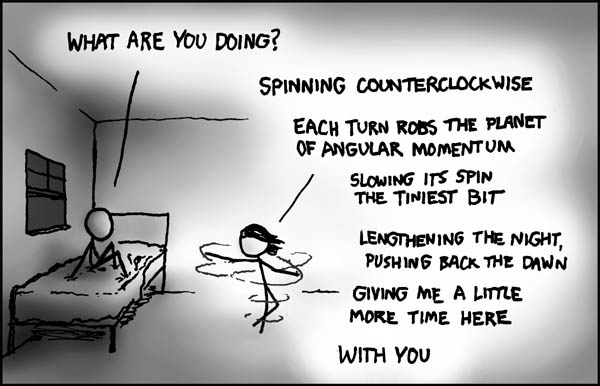
And finally, for anyone wondering what xkcd 162 is, here you go:


And you can find the rest of xkcd here. At least the author of xkcd still dreams of big things. Even if we can't do them any more.


Follow Friday     Home

Tuesday, June 10, 2014

Review - Archduke Franz Ferdinand Lives! A World Without World War I by Richard Ned Lebow


Short review: Franz Ferdinand evades Gavrilo Princip and World War I never happens. From there, the author envisions two very different worlds in extreme detail.

Haiku
Franz Ferdinand lives
World War I is averted
And two worlds ensue

Disclosure: I received this book as part of the LibraryThing Early Reviewers program. Some people think this may bias a reviewer so I am making sure to put this information up front. I don't think it biases my reviews, but I'll let others be the judge of that.

Full review: Archduke Franz Ferdinand Lives! imagines a world in which the titular archduke and his spouse manage to avoid being killed by Gavrilo Princip in Sarajevo on June 28, 1914. From there, Lebow posits that World War I could have been avoided, resulting in a posited pair of alternative histories, one alleged to be "better", and one described as "worse". Unfortunately, Lebow's hypothesized counterfactuals are poorly supported, tediously overlong, and ultimately unconvincing.

In the opening pages of the book, Lebow discusses the primary point of departure from history that he envisions - Archduke Franz Ferdinand's motorcade does not take a wrong turn, does not pass near where Princep lay in wait, and the Archduke doesn't die with a bullet in his neck. This, Lebow contends, would be sufficient to avert World War I, asserting that without this one incident, the great powers of Europe would behave reasonably and rationally, and, if no similar trigger occurred by 1919 or so, everyone would realize that peace was in their national interest and give up war permanently. This assessment seems, at best, overly optimistic. Even if the provocation of Ferdinand's assassination not happened, the powers of Europe were poised for war, harboring ambitions and grievances that probably would have put them on a collision course.

Lebow contends that it would not have been in the best interests of the European powers to fight a war, but nations often do not act rationally. Germany was hungry for the prestige that came with colonies. That, and Kaiser Wilhelm's obsession with naval power, put Germany on a collision course with Britain. France was still seething over the loss of Alsace-Lorraine forty years earlier, and Austro-Hungary itself had been willing to precipitate an international crisis that almost resulted in war as recently as 1908 when it annexed Bosnia-Herzegovina. Italy had territorial ambitions in land that was controlled by Austro-Hungary, and Russia was a dangerous combination of apparently powerful and self-consciously insecure, politically positioned in such a way that it had to respond to almost any provocation to maintain its status as a great power. But Lebow dismisses this and all of the other intertwined tensions with little more than a hand wave.

And this reveals what is essentially the weakness that runs through the book. Lebow takes complex situations and then uses simplistic and reductive assertions to brush reality aside to fit the conclusion he wants. Lebow doesn't come up with reasoned arguments in support of his proffered counterfactuals so much as he simply asserts that his preferred outcome is the most reasonable one and then forges ahead blithely dismissing that there could be counterarguments in an off-hand manner. Between Lebow's wildly optimistic faith in the reasonableness of nations and his raw assertions of how events would play out, the book feels more like a wish-list of fantasies rather than an evaluation of what might happen had history been different.

I don't mean to suggest that all of Lebow's predicted changes are ill-supported: So long as he is dealing with the broad strokes of history he seems to be on reasonably solid ground. Had World War I never happened, the Versailles Treaty would have never happened, which makes World War II less likely. Without World War I, the Russian Revolution would have been far less likely, meaning the Soviet Union would likely not have existed, and the Cold War would have not taken place. And so on. But these sorts of observations are trivial, and even banal, and not the sort of thing that one could build a book upon.

Lebow could have chosen to fill out his book in one of two ways. He could have, for example, focused on the impact of Franz Ferdinand himself, given that in the alternate worlds he envisioned, Ferdinand lives past 1914. Lebow does this to some extent, but it is an altogether one sided analysis - in Lebow's view Ferdinand would have been a liberalizing influence had he survived to become Emperor of the dual monarchy, a position backed up by Ferdinand's historical writings. But the problem is that Lebow doesn't even seem to consider the possibility that Ferdinand would behave differently if he actually ascended to power. History is replete with examples of men who were advocates of political liberalization while they sat on the outside of the corridors of power, but became staunch supporters of the status quo once they were ensconced on the throne. Lebow could have evaluated the differences that would have resulted depending upon which direction Ferdinand took, and provided an interesting analysis of the differences that would result. But Lebow doesn't do that. In both of his proffered scenarios, Ferdinand is a liberal influence, and in both of his proffered scenarios Austro-Hungary offers greater autonomy to the various national groups under its banner.

Instead, Lebow fills up the pages of his book with nearly endless, mind-numbingly tedious detail. But this detail is not only exhausting and dreary, it is often also complete unsupported by anything other than Lebow's assertion that the world would be as he envisions it. For example, in his description of the alternate life of Egon Schiele (who died in the influenza epidemic of 1918 along with his wife, and whose work was considered so pornographic that a judge in a trial burned one of Schiele's erotic drawings), Lebow states:

"He responds well to fatherhood and begins a series of paintings of his son. They are initially similar to his paintings of adult nudes: contorted, outlined figures composed of pale, sometimes sickly, flesh tones, accented with res and blues that suggest erotic potential but severe alienation. Gradually his portraits of his son, and to some extent those of other people, become less angular and show more of an inner light, heightening the tension between the human potential and the social situation."

But this isn't a conclusion that is based upon anything more than wishful thinking. There isn't anything in Schiele's life that would suggest that his art would have developed in the direction Lebow confidently asserts that it would. Lebow isn't taking reality, changing an element, and then projecting what consequences would flow from the change. Instead, he is simply indulging in wild speculation without even so much as a cursory nod to actual history. Time and again, Lebow makes very detailed, but almost completely unsupported, and often implausible claims as to the course history would take. Physicists would demand, and be able to enforce, in an international accord to limit the development of nuclear weapons. Humphrey Bogart would become a well-regarded Shakespearean stage actor, but would get involved in the farm labor movement in California, resulting in his getting roughed up by anti-union thugs. Richard Nixon would become a televangelist instead of a politician, but his preaching career would play out almost exactly like his actual political career did. And on and on and on and on.

And on. Most of the book is taken up by these sorts of descriptions. Lebow seems to have taken the position that if two or three representative examples would be good, ten or fifteen would be that much better. So instead of describing the alternate lives of one or two jazz musicians, Lebow gives long and convoluted descriptions of the alternate world careers of almost a dozen. And, as long-winded as these descriptions seem, they amount to nothing more than a collection of flat assertions: Duke Ellington would abandon the Jim Crow South for Britain, play shows there, work with Cole Porter, get praise from Igor Stravinsky, get knighted by the British monarch, and share a Nobel Peace Prize with Louis Armstrong. This seems like a moderately interesting scenario, but this is pretty much all Lebow tells us about it, and all the justification he gives for it as well. But Lebow doesn't bother to explain what Ellington might have done other than move to Europe that would have resulted in a Nobel Prize. Nor does Lebow explain why Armstrong shared the honor with Ellington. It seems easy to believe that the fictional Ellington and Armstrong would be brilliant musicians, as they clearly were in the real world, but Lebow doesn't bother to give any explanation for why he thought they would earn a Nobel Prize in the fictional world. And the problem is that the book is, for the most part, these skeletal fictional biographies, repeated ad nauseum. Filled with prolonged skeletal descriptions of the lives of various noteworthies, the book reads like a highlight catalogue without the substance that would give the entries any significance.

Lebow does present two alternate visions of a world in which World War I never took place: The first is a "better" world where peace breaks out with art, music, and flowers for everyone, and the second is a "worse" world that ends with a limited nuclear exchange between Britain and Germany in the 1970s. But these aren't explorations extrapolating what might happen if World War I had never happened. They are wild flights of fantasy that start with the counterfactual hypothesis that World War I was avoided, and then run off in unsupported directions racing past the line of "extrapolation" and into "self-indulgent daydreams". This sort of unrestrained speculation might support a fictional work, especially if it were fleshed out from the bare bones presentation Lebow provides, but it is entirely unsatisfying when one is expected to take it seriously as an academic evaluation of possible alternative history.

Even in Lebow's "better" world he avers that some things would be worse than in our actual world. Without the impetus provided by two world wars and a cold war, technological development in the "better" world lags. But more troublingly, in the "better" world, colonialism persists much longer, antisemitism is pervasive throughout Europe and the United States, and both racism and sexism remain dominant and unchecked forces for far longer. All of these problems are simply hand-waved away by Lebow with little more than a shrug. It seems that a world is "better" in Lebow's estimation, so long as it is better for white male Christians.

Overall, Franz Ferdinand Lives! is both overly long and tedious, and yet much too short. The predictions that the author makes are mostly obvious and banal, and are leavened with tiresomely detailed skeletons of biographies that lack the muscle that would give them any kind of life. On the whole, this book feels more like an outline for a fictional book of alternate history rather than an actual book in itself. This isn't so much a bad book, as it is merely an unconvincing and forgettable one.

Richard Ned Lebow     Book Reviews A-Z     Home