Monday, July 22, 2013

Musical Monday - Titanium by David Guetta (featuring Sia Furlar)


This Musical Monday is about science fiction as a metaphor. It is about how science fiction allows an artist to say moderately profound things about the world using a means that lets the statement sneak into the conversation. The context of this is the music video for David Guetta's song Titanium, and unlike many Musical Monday's, which are usually just about the song, this is about the song and the music video made for the song.

On one level, the video is about a teenager with paranormal powers that he seems to have limited control over. The opening scene shows a devastated school, with the boy in the epicenter. As he rides off on his bicycle, a terrified teacher tells the police her story. After pedaling furiously to get home, the boy reaches an empty house that oddly has a television on, showing a news report of the incident he was apparently the cause of. When the police arrive at his house, he flees to the woods, and then is cornered by heavily armed SWAT officers before he curls into a ball on the ground and unleashes a blast of energy to throw them back. His confusion at the events is palpable through the miniature movie. The viewer can feel his fear, but also hears the defiant lyrics I'm bulletproof, nothing to lose/Fire away, fire away. He is hunted, but he has an ace in the hole.

But I think the song and the video aren't about paranormal powers at all. The opening lyrics of the song reveal the real root of the story: You shout it out/But I can't hear a word you say/I'm talking loud, not saying much/I'm criticized/But all your bullets ricochet. This song is about the bewildering and frightening experience of being a teenager, specifically a teenage boy. Or at least, I identify it as being about being a teenage boy. I have only experienced being a teenage boy, but I imagine that being a teenage girl is not significantly different, although given my limited perspective I cannot be sure.

Through the video, the central character is at the heart of events that he fundamentally doesn't understand. He's adrift in an adult world, but all the adults in this world are either scared of him, or threatening. He doesn't understand what is happening, but the only way he can react is by running away or lashing out indiscriminately. No one will listen to him - the one adult in the video who isn't a police officer shuts the door on him. Notice also that there are no other children in the video: the protagonist is alone, by himself, him against the world. When he gets to his home, there is no one there, but there is a television. Even at home he is alone, and when the police break down the front door, even home is not a refuge. These are feelings that I can recall feeling vividly as a teenager, not for any particular cause, but just because that's how a teenager perceives the world.

Being a teenager is not easy. You're on the cusp of adulthood, so you're kind of expected to be an adult. But you're not an adult, although you're not really a little kid either. You're in an in between space, and you're trying to figure out who you are, what is expected of you, and so many other things. Look at the video - when he is home and trying to pack for his escape, he throws aside a teddy bear and a stuffed frog, which are on his bed because in a real way he is still a child. But like all teens, he is confronted with the adult world in full force. Adults are baffling creatures that you thought you'd understand when you got older, but now you're older and they seem even less explicable than they did before. And you just want everything to go away. You lash out, because that's what you know how to do, and the rage inside you needs to work its way out somehow. And you put on the armor of uncaring, because if you don't, the raw feeling will overwhelm you.

I know a teenager who is living this right now, and I've definitely, although not intentionally, contributed to his confusion and anger. And he's made some decisions that I think are probably going to prove self-destructive and that he will almost certainly regret. And even though he probably will never read this, and I may never get to say it to him, what I has to say is this: I've been there. I know what you are feeling. Most of it anyway. None of what has happened is your fault, but you have had to deal with the worst parts of it. It's not fair. Nothing is ever fair. I can't stop you, or even really influence you. But I understand where you are right now. And, it seems, that's all you will let me do.

Previous Musical Monday: Anthem of the SFWA-Fascists by Stephen Brust
Subsequent Musical Monday: Nothing to Prove by The Doubleclicks

David Guetta     Sia Furler     Musical Monday     Home

Friday, July 19, 2013

Follow Friday - The Hundred Years War Was Actually One-Hundred and Sixteen Years Long


It's Friday again, and this means it's time for Follow Friday. There has been a slight change to the format, as now there are two Follow Friday hosts blogs and two Follow Friday Features Bloggers each week. To join the fun and make now book blogger friends, just follow these simple rules:
  1. Follow both of the Follow My Book Blog Friday Hosts (Parajunkee and Alison Can Read) and any one else you want to follow on the list.
  2. Follow the two Featured Bloggers of the week - Meredith's Musings and Guiltless Reading.
  3. Put your Blog name and URL in the Linky thing.
  4. Grab the button up there and place it in a post, this post is for people to find a place to say hi in your comments.
  5. Follow, follow, follow as many as you can, as many as you want, or just follow a few. The whole point is to make new friends and find new blogs. Also, don't just follow, comment and say hi. Another blogger might not know you are a new follower if you don't say "Hi".
  6. If someone comments and says they are following you, be a dear and follow back. Spread the love . . . and the followers.
  7. If you want to show the link list, just follow the link below the entries and copy and paste it within your post!
  8. If you're new to the Follow Friday Hop, comment and let me know, so I can stop by and check out your blog!
And now for the Follow Friday Question: Book Vacay: Where is the best destination reading spot for you? (Where do you like to go to read other then your home).

As I have noted before, I do very little of my reading at home. Most of the time when I am home, I am writing, editing, fixing mistakes I made when writing the HTML for this blog, trying to catch up on watching science fiction or fantasy related media, and all of the various things that one needs to do to keep function, like paying bills, washing dishes, and once in a while, cooking food. Actually, come to think of it, most of the time when I am home I am sleeping, but that's just not very interesting.

This is the bus I ride every work day.
Or one that looks just like it.
The key is that most of the things I do at home are things that I mostly can only do at home, and so I have to make use of my time reasonably wisely if I want to get done all the things I want to get done in a typical day. Which leaves limited amounts of time available for reading while I am at home. On the other hand, I try to read a couple of hours every day, so that has to be squeezed in somewhere. And that somewhere is on the bus, where I get to sit (usually, as long as the bus isn't so full that I have to stand, which happens depressingly often) for about two hours every day. I catch snippets of reading in other places here and there - I rarely go anywhere without having a book on hand so that I can read if I'm standing in line or waiting for something or have some other dead time on my hands - but the bulk of my reading takes place on the bus that takes me to and from work.

Go to previous Follow Friday: The Atomic Number of Ununpentium Is 115

Follow Friday     Home

Thursday, July 18, 2013

Review - The Legend of Broken by Caleb Carr


Short review: A historical fiction set in a city that history doesn't have any record of existing revolves around a religion that never existed, two plagues that never happened, and a man who never existed who was willing to manipulate the politics of a nation that never existed to compel a woman who never existed to become his wife.

Haiku
Historical fiction
About fictional events
May be fantasy

Full review: How much actual history does a book need to contain in order to be considered historical fiction? If a book deals with a period and a place about which we have no actual historical information of any kind, does that book still have a claim on the label "historical fiction"? Or is that book more properly classified as fantasy? This is a question that lurks behind The Legend of Broken which describes events that take place in central Germany during the post-Roman period between the fifth and eighth centuries in the fictitious city of Broken as they come into conflict with the equally fictitious forest-dwelling people of Bane. Through the book we are ominously told several times that this story is a tale of how the mighty city of Broken was laid low by its own internal contradictions, clearly an attempt to connect this work with Edward Gibbon's History of the Decline and Fall of the Roman Empire, but the story never actually pays off, instead sputtering out with an anticlimactic whimper about a jealous and powerful man who wants another man's wife.

Framing the main story is a supposed conversation between actual historical figures Edward Gibbon and Edmund Burke discussing Gibbon's supposed discovery of the texts relating to Broken and Gibbon's scholarly treatment of them. In the conversation, Gibbon asks Burke's advice as to whether to publish the material, which Burke counsels against doing, although the reason for Burke's admonishment seems unclear. There isn't anything in the story itself that would seem to have been particularly offensive to eighteenth century sensibilities, and the fact that the document supposedly described a hitherto unknown culture in Europe seems like it would be something that would have given Gibbon even more fame than he already had. Burke's advice seems to be grounded in nothing more than Carr's need to provide a reason why this manuscript would not have been revealed by Gibbon. But this would have been an entirely moot point had the unnecessary framing story been simply left out of the book. But it is there, and because of the framing story, the book is filled with end notes, supposedly from Gibbon expounding upon the historic or cultural significance of various elements of the story, and every now and then there will be some expository material supposedly written by Gibbon inserted in between the plot oriented portions. This conceit feels forced and artificial, and doesn't add much to the book other than give it an air of faux reality that comes off as pointlessly pretentious.

Some years ago I (not entirely purposely) watched several weeks of the supernaturally oriented soap opera Passions. For the record, Passions was, quite possibly, the worst television show ever aired, or at least the worst television show I have ever seen. In any event, the portion I watched consisted of multiple parallel story lines that, we were repeatedly told, were all going to culminate when everyone met that night at a local restaurant named the Lobster Shack. This dragged on interminably, for weeks of episodes, with the story lines being dragged out to the point of tedium, clearly in an effort to pad out and lengthen a thin plot. It was also clear that the writers of the show thought they were being terribly clever by having this collection of competing story lines that were all going to tie together in one big plot collision. Instead of being impressed by the multiple plot threads, all I could think when watching the show was "get to the damn Lobster Shack already and wrap some of these loose ends up". When I was reading The Legend of Broken, I felt like I was back watching Passions. Carr starts the book shifting back and forth between a handful of story lines, first two and adding more as the plot branches out and new threads are added, following different sets of characters as they all work their way towards the completely unsurprising confrontations that tie them all off together. In this way, Carr takes what is a relatively simple plot and tries to make it seem intricate and convoluted.

The plot of the book is, when all of the artifice is stripped away, fairly straightforward. Broken is a small isolationist city-state in central Germany that is dominated by the worship of Kafra, a faith that insists that physical perfection is a sign of divine favor, and physical infirmity or disease is equated with sin. By systemically exiling any individuals who display any kind of birth defect or congenital disease to the nearby Davon Wood, the citizenry of Broken have created a despised diminutive race called the Bane to which the citizens of Broken attribute demonic prowess. The Bane, for their part, return the loathing for the people of Broken. But at the same time that they are repelled by one another, both the Bane and the people of Broken seem to be fascinated by one another as well, leading to the two peoples being locked into a mutually destructive cycle. With the worship of Kafra firmly entrenched in Broken and the city firmly controlled by the commercial interests of the Merchant Lords and the Bane ensconced in their hidden settlements of Moon worshipers in the Davon Wood, the story opens with the Broken army being sent to wage war in the near impenetrable forest against the diminutive yet deadly Bane.

The hero of the story, to the extent it has a hero, is the Broken military commander Sixt Arnem, a man who has improbably risen from the lower class "Fifth District" of the city to command its entire army. Being an egalitarian sort of person, he married a beautiful woman from the same district named Isadora and, despite the low regard in which the district is held, maintains his household with his numerous children there. The de facto ruler of Broken, and the villain of the book is the Merchant Lord Rendulic Baster-kin, who sets the Broken troops into motion in response to what is clearly a trumped up charge that the Bane had attempted to kill the deified religious leader of the city. Rendulic's own marriage to an exotic foreign woman is the result of a ploy to gain political power, and in a fairly blunt force application of poetic justice, has led to Baster-kin having to conceal a collection of terrible secrets. Running in parallel with the stories of the characters from Broken is the story of the trio of Bane foragers Keera, Veloc, and Heldo-Bah, which eventually leads to Broken bogey-man Caliphestros and his companion panther. Carr sets these various characters in motion in their own story lines and more or less lets the reader stand back and watch, building to what we are ominously told on more than one occasion is the climatic event that doomed the city of Broken.

But the problem with the book is that the oft foreshadowed downfall of Broken never really materializes because none of the characters really seem to take the world they live in seriously. We are repeatedly told that Caliphestros is regarded by the people of Broken as a frightening figure, a demonic individual who committed such vile crimes that he had to have the ultimate punishment inflicted upon him and then be abandoned in the Davon Wood. However, as he is leading Broken's army out of the city to wage war against the Bane, Sixt runs into a former acolyte of Caliphestros' named Visimar and, on a whim, decides to take him along as an adviser. For Sixt to do this is not particularly surprising, because it is an established part of his character that he is indifferent at best to the Kafran religion, but this decision is accepted by everyone around him with only mild objection. After building Caliphestros and his followers up as horrific monsters that terrify the Broken public, the story hand waves away Visimar's presence with the Broken army. And this is because everyone in the story who is not clearly identified as a villain - which for the most part means everyone who is not Rendulic - is incredibly reasonable throughout. Deep into the book, after Sixt's army has reached the edge of the Davon Wood and the Bane forces have rallied to oppose his efforts, the story seems to be moving towards what can only be described as a tragic confrontation. After all, Sixt and his forces have clearly been deceived by Rendulic and his cronies, and the Bane are merely defending their homes against Broken aggression. But rather than having a tragic pay off that leads to advancing the plot and developing characters, instead everyone sits down and hashes out the situation in a reasonable manner that results in the Broken soldiers and Bane soldiers joining forces.

We are told that Isadora runs great risks by continuing to participate in Moon worship, in contravention of Broken's laws, and at the same time provides healing services to those in the Fifth District, which would offend Kafra's priests if they found out. But through the course of the book it becomes clear that these assertions are essentially untrue, and even the high ranking members of the Broken political elite know that the Kafran priests are simply mouthing fairy tales. Despite the supposedly pervasive nature of the Kafran religion in shaping Broken society, it seems that none of the important characters in the story actually believe in its teachings, which makes Sixt's supposedly heretical attitude less iconoclastic and more ordinary. At no point does any character who is not marked as "evil' by the story make any decisions that are unreasonable or which are motivated by prejudice or religious dogma. In short, the book is entirely populated by reasonable characters, having reasonable conversations, and coming to reasonable conclusions, no matter what cultural or religious motivations that we are told they are supposed to have. Such considerations are simply set aside and the characters transform into calm, cool rational and enlightened thinkers whenever they meet someone with a differing background and set of beliefs, even if we had been told repeatedly prior to such a meeting that the two worldviews were antithetical to one another.

And this lack of ideological commitment from the various characters is the problem with the book, and why, despite Carr's obvious attention to the details of his imagined society, the story set within it ends up feeling flat and lifeless. The main difficulty appears to be that Carr, being an educated and intelligent man, seems to have a hard time accepting that any other intelligent person could actually accept the teachings of the Kafran religion of Broken or the Moon cult of the Bane. Consequently, all of the careful world development and lovingly detailed multiple plot lines are thrown over the side whenever adhering to them would be unreasonable from the perspective of a twentieth century observer. Even Rendulic, who is using the Kafran religion as the basis for his villainous plan, is using it in a cynical manner that indicates that it actually isn't important to him in any way. Despite a backdrop filled with odd religious practices and manufactured tribal animosity, the various plot lines of the book all tie together to reveal that the whole fracas has been about a somewhat insane man's desire to rekindle the flame with an old lover who had since married another man. This, winds to an anticlimactic conclusion that seems to affect absolutely nothing in Broken society other than causing a shift in political power out of the hands of someone who is something of a lunatic to some other, much more reasonable individuals. All of this action resulting in almost no effect makes the subplot involving a panther that acts in very human ways, including striking up an impromptu friendship with a legless man and seeking revenge for the death of its cubs for several years, seem almost reasonable. Plus, it's implausibility adds a bit of entertainment to the plodding story.

Even the underlying horror involving twin plagues that strike throughout all of the peoples described in the book seems to be almost irrelevant. One would think that a society built upon the idea that perfect health is a sign of divine favor and sickness and infirmity is a public mark of sin would be rattled to its core by a plague. And for a while, the book seems to be building toward this sort of development, like everything else foreshadowed in the text, this element fizzles out anticlimactically as Visimar, Isadora, and Caliphestros identify the source of the plagues and come up with ways to contain them. And instead of the response one would expect - namely resistance and obstruction from the Moon priestesses of the Bane and the priests of Kafra - the powers that be seemingly override such considerations in favor of halting the spread of the plagues in a relatively pragmatic manner. Or at least one assumes so during the relatively abrupt and unclear denouement. The issue of the twin plagues is not so much dealt with, as ignored, as it more or less drops out of the story when the jealous ex-lover plot takes over the entire book.

Quite simply, none of the events in the book seem to pose an existential crisis for the Broken political order or the existence of the Bane, a conclusion driven in part by the fact that none of the characters in the book see the events in that light to even the slightest degree. In the end, once Rendulic has been dealt with, the government of Broken is placed in the hands of improbably reasonable people while superstitious influences have been discredited, or at least muted. To the extent that there is any change that takes place in the book, it seems that Broken has been strengthened rather than weakened, as the insanity at the heart of its political elite has been removed, and the pernicious nature of its ruling religious class has been contained. With The Legend of Broken Carr has produced an imaginative "what if" setting that takes place in a place and time that is currently a blank spot in our knowledge, but he uses it to create a story that is uninteresting and then tell it in the most convoluted and overly lengthy manner possible.

Caleb Carr     Book Reviews A-Z     Home

Wednesday, July 17, 2013

Review - Prophets of the Ghost Ants by Clark Thomas Carlton


Short review: In the future humans have shrunk to the size of insects and tamed the ants. But they still have bloody wars over religion, wealth, and power.

Haiku
From the lowest caste
To warlord and then ruler
Still the size of ants

Disclosure: I received this book as a review copy. Some people think this may bias a reviewer so I am making sure to put this information up front. I don't think it biases my reviews, but I'll let others be the judge of that.

Full review: In the far future, humans have shrunk to the size of insects and now live a parasitical existence dependent upon the ants, roaches, and termites that are now comparatively the size of draft animals. All of the larger creatures have disappeared, leaving the planet to the insects and the now diminutive humans who coexist with them, but the same lust for power and wealth familiar to those living in the current world remains. Against this backdrop, Clark Thomas Carlton has crafted a story of love, betrayal, oppression, religious strife, and war that remains epic despite taking place in an area that is likely no bigger than a football field.

In the miniaturized future world Anand lives as a member of the midden caste, the lowest caste of the leaf cutter people in Mound Cajoria on the Holy Slope, enduring a life of hard labor and privation while the nobility and priesthood live in opulent comfort. It turns out that not only is Anand a member of the lowest caste, he is a half-breed, the child of a leaf cutter man and a woman of the roach people, who the leaf cutters find both fascinating and revolting, and as such he is the most despised member of the most despised social group on the mound. And from there Anand embarks on a journey that takes him from the lowest of the low to the height of power, although not in a manner or with the results that one might expect.

Early in the book, Anand is taken to meet his mother's people, where he discovers that his birth was not an accident, and the Roach people, or Britasytes as they call themselves, want him to serve as a bridge between their people and the Slopeites of Mound Cajoria. After Anand has been feasted and feted, he falls in love with a Britasyte girl named Daveena and pledges to marry her, but then he has to return to his life of drudgery and oppression in Mound Cajoria. He finds himself setting out for unknown territory with half of the mound dwellers when the colony splits, gets captured by a hitherto unknown group that call themselves the Dranverians, learns a new way of life that rejects the castes and the gods whose priesthoods enforce them, and then returns to Cajoria to liberate his people with the teachings of the Dranverites, only to find that war has come upon the Slopeites in the form of a new threat from the ghost ant-allied servants of the termite god Hulkro.

Through the story, Anand learns and grows, eventually ending up as the innovative war-leader of a movement of disaffected workers from the slope, collections of roach allied people, and the ally of the reluctant noble classes of the various Slopeite mounds as they confront the shared menace of the servants of Hulkro. In the end, victory on the battlefield coupled with the foolishness of his enemies and a political marriage brings Anand to a position he could have only dreamed of at the outset of the book. And yet everything does not finish with a fairy tale wedding. Yes, he marries the princess, but she despises him. Yes, he reforms his kingdom, but at the cost of thousands of lives. Yes, he implements some of the egalitarian reforms espoused by the Dranverites, but his means of accomplishing them causes the Dranverites themselves to reject him. Triumph, it turns out, is a mixed bag.

To a certain extent, the story of power politics and religious intolerance is only half of the point of the book. Slopeite society is unjust, but it seems that a large part of its unjust nature is driven by the symbiotic relationship humans have with the ants they live with. The ants have a rigidly structured society, and so the humans that live with them wind up with one as well, a pattern replicated throughout the various insect allied societies that show up in the game. Human society has become a reflection of insect society, and it should surprise no one that the strictures that insects live under seem ill-suited to humans. And humanity seems to have almost no other choice because humans have not so much domesticated the insects in their lives as they have simply fooled them into not noticing that they live among them by bathing themselves in the insect recognition scent.

Even after Anand has conquered and married the vain Princess Trellana to secure his political position, the stark fact remains that humanity is entirely dependent upon the insects they live among. Everything the humans eat comes from the insects they live with. The dwellings the humans live within are carved out of the nests of the insects they live with. The insects serve as beasts of burden and weapons of war for the humans. When wild insects show up to prey upon the humans, they need their insect allies to help fend off the predators. And so on. And each of the microscopic societies that make up the patchwork quilt of humanity seen in the book is markedly different, and the cause of this seems mostly to be that they have conformed their human lives to accommodate living among their insect companions. And even still the characters remain very human. The nobility exploits the lower classes. The priesthood lies to royalty. Wars take place over religious differences. And so on.

But despite the attention to detail in so many places in the book, there are other areas where physics and biology simply hand waved away. At the tiny scale the story takes place at liquids work work very differently from the way we are used to due to the fact that surface tension would become a significant issue, and yet this never seems to be accounted for in the book. Rain would be something of a natural disaster, causing what would be comparatively torrential flooding with even a summer shower amounting to a deluge that would submerge entire nations. The physics of the very small would fundamentally change the way that tiny humans interact with their environment. The reduced amount of mass for humans would mean that they could tall from a comparatively great height without fear of injury. One human punching another human in the face would be completely ineffective at that size, as their tiny muscles would be unable to generate enough force to cause damage.

The humans in the book seem unaffected by their small size other than the fact that they are now tiny, a development that seems more than moderately implausible. There isn't a direct correlation between brain size and intelligence - after all, some animals such as whales and elephants have larger brains than humans - but there does seem to be a minimum brain size below which one cannot go and expect intelligence, and the humans in Prophets of the Ghost Ants clearly have brains well below this size, and yet seem to be just as intelligent as full-size humans. Everything about the humans in the book other than their size seems to have been unaffected by this radical scale change. Despite the story being presumably millions of years in the future, humans still come in a variety of skin tones, and darker skinned humans are still discriminated against. For a portion of the book it seems like some humans have become enormously more fecund than humans are at present, but then it is revealed that this is simply a byproduct of the diet that they eat. Similarly, for a time it seems that some humans have developed an ability to prevent the spread of fungus through any mounts using their urine, but this too is revealed as a side effect of their diet.

The lack of attention paid to these details seems out of place in the book, because Carlton clearly spent so much time making sure that so many other elements made sense. The human interactions with the insects around them are controlled by using the insects' instinctive reactions to various pheromone scents. Carlton clearly understands how difficult it would be to harness the use of fire on this small scale, and how dangerous it would be as well. Though set in the far future, human technology has regressed to a primitive state in many areas, and this seems to be in large part because of the difficulties that would be inherent in using heat to generate electricity to power technology at such a tiny scale. The result is a fictional setting in which it seems that a fair amount of care has been taken to consider the ramifications of some of the conditions the characters find themselves in, but in which others seem to be simply hand-waved away without much thought.

These issues aside, Prophets of the Ghost Ants remains an engaging piece of fiction built upon an imaginative idea. Even though everything takes place on a very small scale, the scope of the conflict remains epic and the nature of the conflict remains quintessentially human. The book has so much packed into it - from an exploration of class divisions, to the religious hypocrisy of the ruling and priestly classes, to the causes of religiously driven wars, to a coming-of-age story for Anand - that any reader will almost certainly find multiple levels of material in it to interest them.

Clark Thomas Carlton     Book Reviews A-Z     Home

Tuesday, July 16, 2013

2013 Campbell Award Nominees

Location: Campbell Conference Awards Banquet at the University of Kansas in Lawrence, Kansas.

Comments: And here we are, in 2013, and the Campbell Award ballot is just as much of a pale sausage-fest as it ever was. Not a single woman was even nominated for the award. Not a single non-white author was nominated for the award. While the Hugo Awards, the Nebula Awards, and even the World Fantasy Awards have become more inclusive in their reach as time has gone by, the Campbell Award, if anything, has gotten worse in this regard.

Best Novel

Winner:
Jack Glass by Adam Roberts

Second Place:
Any Day Now by Terry Bisson

Third Place:
(tie) Alif the Unseen by G. Willow Wilson
(tie) Empty Space by M. John Harrison

Finalists:
Blue Remembered Earth by Alastair Reynolds
Existence by David Brin
The Fractal Prince by Hannu Rajaniemi
The Hydrogen Sonata by Iain M. Banks
Intrusion by Ken MacLeod
Railsea by China Miéville
The Rapture of the Nerds by Cory Doctorow and Charles Stross
Slow Apocalypse by John Varley

Go to previous year's nominees: 2012
Go to subsequent year's nominees: 2014

Book Award Reviews     Home

Musical Monday - Anthem of the SFWA-Fascists by Steven Brust

The astute among you may notice that this post is being made on a Tuesday, and not a Monday, as would be usual for a post that is part of a series titled "Musical Monday". I have an explanation. Yesterday, while I was in the middle of putting this post together, an apparently drunk driver tore through my neighborhood and wiped out a telephone pole. This knocked out the power in the entire neighborhood, which made accessing the internet difficult. It also made seeing anything difficult. And because the downed telephone pole and exposed power lines were laying across the only road into or out of the neighborhood, it made going anywhere else difficult as well. One might even say these things were impossible. Consequently, the completion of this post was tabled until the electric company could replace the pole and restore power. Which happened today. So one might think of this post as "Musical Monday: The Tuesday Edition".


Today's Musical Monday selection is a humorous musical response to the SFWA_Fascists account written and performed by author Steven Brust. For those who haven't been following the happenings in the science fiction and fantasy world, this selection needs a little bit of context. The Science Fiction and Fantasy Writers of America (the SFWA) recently held its annual election for officers for the organization. John Scalzi decided to step down after serving as SFWA President for three years, and let someone else take the rather thankless job of running an organization that could best be described as a herd of recalcitrant cats. To replace him, the very reasonable and compete Stephen Gould decided to run, as did another entrant who should only be described as the Racist Sexist Homophobic Dipshit. Needless to say, the campaign went poorly for the RSHD, but it did bring out of the woodwork some of the somewhat less than savory members.

In the wake of the campaign, there was a kerfuffle over the SFWA's professional publication The Bulletin, when some members objected to the rather traditionally sexist cover art of a woman in a revealing chain mail bikini and a couple of articles including one Mike Resnick and Barry Malzberg that discussed "lady editors" and included a remark about the physical attractiveness of one of that group, and another by C.J. Henderson that suggested that Barbie is a role model for young girls "because she maintained her quiet dignity the way a woman should." When confronted with the thought that their article may have been a touch sexist in parts, Resnick and Malzberg responded by doubling down and calling all of their critics terrible would-be censors who hated free speech. This, as one might expect, did not work as well as Resnick and Malzberg thought it might.


Following this and other exchanges, including one in which author N.K. Jemisin talked about the problem of sexism and racism in the genre fiction community resulting in the RSHD launching a crude and brainless attack upon her, a Twitter account popped up called @SFWAfascists that was clearly intended to attack those members of the SFWA who thought that perhaps taking a stand against racism and sexism in their professional organization was a good idea. The account's output consists entirely of inane rants and a list of Twitter accounts titled "PC Monsters of the SFWA", singling out particular members that the SFWAfascists account creator presumably thought deserved some opprobrium. The entire SFWAfascists account is clearly intended as an attack from which the targets they selected were supposed to recoil in horror. Other Twitter users were apparently supposed to identify the "PC Monsters" and, I don't know, vilify them? Shun them?


This has failed spectacularly. People have flocked to follow the "PC Monsters", some of whom were mystified about the influx of new Twitter followers until they were apprised of the cause. Despite the SFWAfascists account's claims that their targets have no sense of humor, the various "PC Monsters" have found the situation hilarious. SFWA members who have been left off the list have expressed disappointment that they had not been honored as a "PC Monster". Some have demanded that the SFWAfascists add them to the list. Jim C. Hines put together trading cards detailing the various super powers of those identified as "PC Monsters". And so on. While the identity of the person behind the SFWAfascists account has not been confirmed, one can only note that the rhetoric it uses looks remarkably similar to posts made elsewhere by the RSHD. Whoever it was who created this short-lived attempt at vitriol, the joke has ended up being on them, as Brust's song amply demonstrates.

Update: There is another parody account called SFWA_fascist was created to make fun of the original troll account. This Twitter account is not spewing racist, sexist homophobic tripe like the first one, but rather seems to have been created to parody the original. It hasn't posted a new tweet since July 13, because, as the tweeter notes, parodying something as mindlessly idiotic as the SFWAfascists account is painful to do.

Update Two: The "PC Monsters of the SFWA" list has had its name changed. In an effort to prove that he or she is a complete idiot, the SFWAfascists account holder decided to stop calling the objects of its ire "PC Monsters", and now calls them "PC Cunts of the SFWA". This should tell anyone everything they need to know about the character of the creator of the SFWAfascists account.

Previous Musical Monday: The Ballad of Bilbo Baggins by Leonard Nimoy
Subsequent Musical Monday: Titanium by David Guetta (featuring Sia Furler)

Steven Brust     Musical Monday     Home

Monday, July 15, 2013

2013 Mythopoeic Award Nominees

Location: Mythcon 44 in East Lansing, Michigan.

Comments: In 2013, the Adult Fantasy Literature category was won by Digger, an omnibus graphic novel collecting the entire series by Ursula Vernon. The fact that a graphic novel won a Mythopoeic Award is not surprising - after all there have been several excellent graphic novels that have featured fantasy themes, such as Phil Foglio's Girl Genius series, Neil Gaiman's Sandman series, and Alan Moore's Watchmen. The unusual thing is that when Digger won, the Mythopoeic Society, unlike some other award distributing organizations, didn't have a conniption and change their rules to prevent a graphic novel from winning in the future, or relegate graphic novels to their own subcategory so they wouldn't sully "real" literature.

Best Adult Fantasy Literature

Winner:
Digger (Volumes 1-6) by Ursula Vernon

Other Nominees:
Death and Resurrection by R.A. MacAvoy
The Drowning Girl by Caitlín R. Kiernan
Hide Me Among the Graves Tim Powers
Weirdstone trilogy (The Weirdstone of Brisingamen, The Moon of Gomrath, and Boneland) by Alan Garner

Best Children's Fantasy Literature

Winner:
Vessel by Sarah Beth Durst

Other Nominees:
Giants Beware! by Jorge Aguirre and Rafael Rosado
The Hero's Guide to Saving Your Kingdom by Christopher Healy
The Princess Curse by Merrie Haskell
The Spy Princess by Sherwood Smith

Scholarship Award in Inklings Studies

Winner:
Green Suns and Faërie: Essays on J.R.R. Tolkien by Verlyn Flieger

Other Nominees:
C.S. Lewis and the Middle Ages by Robert Boening
C.S. Lewis, Poetry, and the Great War 1914-1918 by John Bremer
Exploring J.R.R. Tolkien's The Hobbit by Corey Olsen
Tolkien and the Study of His Sources: Critical Essays edited by Jason Fisher

Myth and Fantasy Studies

Winner:
Song of the Vikings: Snorri and the Making of Norse Myths by Nancy Marie Brown

Other Nominees:
As If: Modern Enchantment and the Literary Prehistory of Virtual Reality by Michael Saler
The Christian Goddess: Archetype and Theology in the Fantasies of George MacDonald by Bonnie Gaarden
Critical Discourses of the Fantastic, 1712-1831 by David Sandner
Fairy Tale Queens: Representations of Early Modern Queenship by Jo Eldridge Carney

Go to previous year's nominees: 2012
Go to subsequent year's nominees: 2014

Book Award Reviews     Home

Thursday, July 11, 2013

Review - The Amazing Pitsville and the Beggar's Invisible Railways by Gabe Redel


Short review: McGavin jumps through the clouds to a strange place named Pitsville that is full of strange people. He makes friends, gets married, and returns to our world. Then he goes back to Pitsville, tangles with a wrestling king, has Pitsville stolen from him, and wins it back.

Haiku
Skiing accident
Leads to a magical world
And getting married

Disclosure: I received this book as a review copy. Some people think this may bias a reviewer so I am making sure to put this information up front. I don't think it biases my reviews, but I'll let others be the judge of that.

Full review: The Amazing Pitsville and the Beggar's Invisible Railways is a difficult book to evaluate, because it is so very different from most other books. This is both good, in that the book has a very original feel, and bad, in that at many points the story seems to consist of the author just throwing whatever off the wall serendipitous plot device is needed to move the protagonists along. The closest comparison I can think of would be a book like Norman Juster's Phantom Tollbooth, or possibly Jonathan Swift's Gulliver's Travels, but in those books the allegorical points being made by the authors are relatively apparent, while in The Amazing Pitsville, they were often incomprehensible, although still usually entertaining.

The story opens with the main character, a rather arrogant young man named McGavin, off with his friends at a cloud skiing resort. Cloud skiing is the practice of skiing on clouds, which is an indication that the story is a little off the wall. McGavin and his collection of accomplices spend their time eating cheeseburgers and making ski runs until McGavin notices that some professional cloud skiers have been using a particularly dangerous jump that is normally off limits, and decides he has to try the jump too despite an impending storm. After recruiting one of his friends to join him, he makes the run, ditches his friend on the slope, and leaps directly into the oncoming thunderhead. And then McGavin finds himself in a completely different place that he comes to know as Pitsville.

From here, the story becomes odder and odder. He tries to climb out of the hole he finds himself in and is menaced by a ferocious beast. Dissuaded, he wanders into the forest and finds a weeping butterfly who is sad because she doesn't have a husband, and then comes across a farmer perpetually plowing a field that never stays plowed. Hitching a ride to town with the farmer, McGavin finds himself in a store in which a dirty boy tells him he has to buy something but nothing is for sale. Eventually McGavin finds himself in an invisible house owned by a burly and humble lumberjack and courting a pretty lost girl named Sonia. McGavin marries Sonia, and they all settle down in Pitsville.

The book meanders from there, seeming more like a collection of linked short stories than a single coherent plot. Eventually McGavin and Sonia wind up back in the "regular world", and then they move around a bit, find themselves shunned by McGavin's former friends, then accepted by them, survive a fire, and then wind up back in Pitsville. Just about everyone in Pitsville gets together and forms a theater company, and everything goes swimmingly until the jealous King Dill of a neighboring kingdom sends his dragon to bring them back to his castle. Dill imprisons them, wants to wrestle, and then assembles his army of motorcyclists wearing Greek helmets to attack Pitsville.

About halfway through the book McGavin, Sonia, and a few of their friends find themselves in Pitsville again and the villain of the story finally makes his appearance in the form a Kemp the Beggar, a being that gains power over his victims when they give him what he asks for. The Beggar is using hidden extradimensional passages to move about the world to take things away from people and threaten the very existence of Pitsville. McGavin and his companions, of course, set out to stop the Beggar, along the way recruiting an apathetic dog named Beagley and a soldier named Pops who can't seem to remember anything. This leads to a convoluted story line that involves the beast that kept McGavin in Pitsville at the beginning of the story plus its offspring and eventually results in convincing the population of an entire valley to jump into a volcano.

If this doesn't seem to make much sense, that's because it more or less doesn't except in the context of the off-kilter world that Redel has constructed for his characters to live in. The trouble is that I am certain that most of the characters and events in the story are meant to have allegoric, symbolic, or metaphoric significance, but for the most part I simply had no idea what that might have been. I am also reasonably certain the the story was supposed to be something of a bildungsroman for McGavin, but I simply didn't much in the way of character development for him in the story. McGavin started the story with those around him seeing him as a bossy, thoughtless, and somewhat arrogant character, and ended the story with those around him talking about how he had developed into a a considerate and capable leader, but I didn't really see anything in McGavin himself that would support those assessments. I suspect that the problem is that there was simply not enough time spent establishing the "unfixed" version of McGavin for me to be able to read the rest of the story and say, "Old McGavin would have done this, but new McGavin has done that instead". This element of the story probably would have worked better had we gotten to see McGavin in his "old life" for more than a single chapter before he was whisked away on his voyage of self-discovery.

So what can one say about a story that was enjoyable but which you are reasonably certain contained heaping helpings of allegorical symbolism that you are reasonably certain you missed most of? As I said, I enjoyed the book, complete with all of its zany and off-the-wall characters and improbable plot points, but on the other hand, I always felt like I was missing some understanding that I should have been getting. I am not certain if I am simply not observant enough to comprehend what was intended, or if the references and symbols were simply too opaque, but either way what I got out of The Amazing Pitsville was a silly and convoluted story that was a diverting and imaginative fantasy, but not anything more than that.

Gabe Redel     Book Reviews A-Z     Home

Tuesday, July 9, 2013

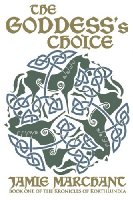
Review - The Goddess's Choice by Jamie Marchant


Short review: An aged king seeks a husband for his spirited daughter, a magically gifted peasant tries to overcome prejudice, and an evil duke schemes to seize the throne in a quasi-Celtic fantasy land.

Haiku
A gifted healer,
Princess, and an evil duke
The goddess chooses

Disclosure: I received this book as a review copy. Some people think this may bias a reviewer so I am making sure to put this information up front. I don't think it biases my reviews, but I'll let others be the judge of that.

Full review: I must admit that I started The Goddess's Choice with some trepidation. The cover announces that it is the first book in a series. It is almost immediately apparent that the story is set in a quasi-Celtic fantasy land. The hero is a downtrodden farm boy blessed with inborn magical powers of healing. The heroine is a plucky princess with her own magical gifts and somewhat anachronistic notions of equality. Added together, the book had all of the ingredients to be yet another drab and uninspiring entry into the ranks of generic fantasy novels. But what Jamie Marchant proves is that even when you start with some fairly ordinary ingredients, if you have a creative and capable cook, you can craft them into something special.

The Goddess's Choice is, at its heart, a story of royal intrigue and power politics set in the quasi-Celtic fantasy kingdom of Korthlundia, a nation welded out of the two former rivals of Korthia and Lundia, held together in a somewhat uneasy peace by the long-reigning and even-handed King Solar. But Solar is aged and has only one heir, the teen-aged Princess Samantha, and royal succession being what it is, the suitors for her hand have lined up all the way around the castle. Samantha is a fairly stereotypical headstrong and spirited princess with two aces up her sleeve: Her unexpected (and somewhat unwanted) power to "see" people's auras, and Darhour, the dour Horse Master who becomes her bodyguard.

Through Samantha's story is interwoven the travails of Robrek Angussstamm, a peasant boy who has the ability to heal animals. For this, and his unusual foreign appearance, Robrek is abused by his father, bullied by his brother, and shunned by the other inhabitants in his village, including the local village priest, who condemns Robrek as a "demon child". This is, from my perspective, the weakest part of the book - that in a world in which magic such as Robrek's actually worked, people like him, with demonstrable beneficent capabilities would be regarded as evil and treated like outcasts. The villagers who surround Robrek turn to him whenever they have an animal with a problem, and then universally stiff-arm him in all other situations. Robrek's own father relies upon his son to keep his farm running, and at the same time beats and abuses him. Granted Robrek's father has other issues, but it seems like an odd reaction. Many fantasy novels use this trope, because it is drawn from Western European history and the hunt for "witches". But the scapegoating of women who were accused of being witches in the real world worked precisely because those women didn't have any actual power, and thus could not defend themselves or offer any real tangible contribution to the community. But in a world in which magic is real and works, turning on someone who is able to wield magic seems akin to turning on your village butcher or blacksmith because they are good at their jobs.

Robrek's shunning is even more perplexing when one realizes that his alliance with a particular horse, specified as being a "Horsetad", is something that almost everyone who sees the Horsestad instantly recognizes as marking him as having the special favor of the Goddess Sulis. This shunning is made further puzzling when coupled with the fact that once Robrek walks out of his village everyone who comes into contact with him and sees his healing powers immediately understands just how valuable his skills are, so much so that one nobleman even tries some moderately heavy handed persuasion in an attempt to get Robrek to enter into his service. Other characters in the book deploy magic, in cases like Darhour's use, quite dangerous and deadly magic, and yet they are regarded as capable and valuable assets by the organizations that employ them. It appears that not only does the "everyone in the village shuns Robrek because he has magic powers" plot device seem counterintuitive, but the story itself seems to realize this. In effect, the reader more or less has to swallow the idea that a tiny zone of bigotry would exist within the confines of Robrek's home village and nowhere else in Korthlundia. This somewhat implausible anti-Robrek animus is unfortunate, because so much of the book is so well-done, and Robrek himself is an interesting and likable character. Robrek's character arc requires him to have a fair amount of resentment and anger lurking beneath the surface, other wise his development from a abused child to a confident and capable adult able to wield a sword, perform a courtly dance, and produce powerful illusions would not be as dramatic. The most interesting part of Robrek's story is his interactions with a trio of unusual horses, who guide his education from boy to man, and without his inner core of rage, this path would not have been as engrossing. Even so, this would have been much better had Robrek's cause for rage not felt so contrived.

Other than thise one quibble, the rest of The Goddess's Choice is brilliantly plotted. Much of the book is centered on the schemes and intrigues of the nobles of the land as they try to position themselves for a position in Korthlundia after Solar's death, and most of the scheming centers around the evil Duke Argblutal and his attempts to compel Samantha to become his bride and secure his claim to the throne. Thanks to Samantha's capabilities, she knows that Argblutal is horribly evil. If that wasn't enough to convince the reader of the Duke's vile nature, Marchant details how he enjoys raping and brutalizing women, and how he deals with followers who fail him by castrating them. When confronted with a means of controlling Solor that requires sacrificing three children, Argblutal simply lines the innocents up for the slaughter. The end result is that Marchant has crafted a despicable villain that gives the entire book a very real sense of menace. Argblutal is so over the top that at times he seems to almost be a cartoonish caricature of an actual villain, but every time he teeters on that precipice, Marchant is able to pull him back just enough to avoid having the story descend into silliness.

Samantha's story of vicious courtly intrigue is intertwined with Robrek's story of equally vicious village intrigue, loosely at first, and as the story progresses, more and more closely. At the beginning, the stories intersect only marginally, when the Princess visits a fair held in Robrek's village on a lark. After they return to their own independent stories for a while their stories again intersect when Samantha's horse is injured while she is traveling near Robrek's village, and further enmeshed when Samantha enlists Robrek's mentor's aid in dealing with a plot against her father. As the story goes on, Robrek's story and Samantha's story become braided together, and eventually merge, with his being subsumed into hers by the end. Along the way, Marchant mixes in some twists and turns which, while not entirely unexpected, add enough spice to the story to keep it from becoming stale along the way. The story builds to a satisfying climax, both romantically and politically, but there are clearly additional mysteries left open that will no doubt loom large in later books.

Although The Goddess's Choice feels at first glance like a generic fantasy story, and in many ways is a generic fantasy story, it is well executed, with interesting characters, compelling political intrigue and religious conflicts, and just enough innocent romance and exciting action to keep things moving. For anyone looking for an enjoyable fantasy story that offers a dynamic mix of intrigue, action, and romance, this book is a good place to find it.

Jamie Marchant     Book Reviews A-Z     Home

Monday, July 8, 2013

Musical Monday - The Ballad of Bilbo Baggins by Leonard Nimoy


Once upon a time, before the internet existed, small record labels would make novelty albums. They would often find some funny concept, or sign an off-beat band, or make a contract with a celebrity who wasn't known for singing, and then they would release an album with a relatively small print run that was sufficient to earn enough money to recoup the modest investment made in making the product and keep the label going. Nowadays, this sort of activity has moved to the internet, and putting their music on the web is what brought musical acts like The Doubleclicks, Molly Lewis, and Jonathan Coulton to the public eye. Granted, these acts now all have actual CDs that one can obtain, but they didn't have to wait for a label to sign them to a recording contract before they were able to make their work available for others to appreciate and enjoy.

But back in the 1960s and 1970s, the small independent and quasi-independent record labels were where one could find the quirky, the funny, and the downright odd. They were also where you could find Leonard Nimoy singing, specifically for Dot Records, for whom he records five albums between 1967 and 1970. The albums featured a combination of cover recordings, original music, and spoken word tracks. Because the albums were an attempt to capitalize on Nimoy's Star Trek fame, the first album and a half were recorded in the "Spock" persona, from the perspective of the fictional Vulcan character.

However, on the second side of the second album, Nimoy stepped away from the Spock character and recorded a collection of songs that highlighted Nimoy's own interests, including, apparently, J.R.R. Tolkien's book The Hobbit. And the result was the somewhat silly song The Ballad of Bilbo Baggins, and the incredibly silly video that accompanied it that is seen here.

Previous Musical Monday: Babylon 5 Opening Credits
Subsequent Musical Monday: Anthem of the SFWA-Fascists by Steven Brust

Leonard Nimoy     Musical Monday     Home

Friday, July 5, 2013

Follow Friday - The Atomic Number of Ununpentium Is 115


It's Friday again, and this means it's time for Follow Friday. There has been a slight change to the format, as now there are two Follow Friday hosts blogs and two Follow Friday Features Bloggers each week. To join the fun and make now book blogger friends, just follow these simple rules:
  1. Follow both of the Follow My Book Blog Friday Hosts (Parajunkee and Alison Can Read) and any one else you want to follow on the list.
  2. Follow the two Featured Bloggers of the week - The Reading Realm and The Attic: YA Book Reviews.
  3. Put your Blog name and URL in the Linky thing.
  4. Grab the button up there and place it in a post, this post is for people to find a place to say hi in your comments.
  5. Follow, follow, follow as many as you can, as many as you want, or just follow a few. The whole point is to make new friends and find new blogs. Also, don't just follow, comment and say hi. Another blogger might not know you are a new follower if you don't say "Hi".
  6. If someone comments and says they are following you, be a dear and follow back. Spread the love . . . and the followers.
  7. If you want to show the link list, just follow the link below the entries and copy and paste it within your post!
  8. If you're new to the Follow Friday Hop, comment and let me know, so I can stop by and check out your blog!
And now for the Follow Friday Question: Today’s is the U.S.’ Independence Day. Share your favorite book with a war in it, or an overthrow of the government.

The Man-Kzin Wars

Science fiction and fantasy are riddled with wars. E.E. "Doc" Smith's Lensman series  (read review), George R.R. Martin's Song of Ice and Fire series (read review), David Brin's Uplift series, Catherine Asaro's Skolian Saga (read review), Poul Anderson's Dominic Flandry series, and on and on. The Lord of the Rings is a root of most modern fantasy, and it is the account of the final war in a series of wars that are discussed in The Silmarillion. Because one of the dominant theme in fantasy fiction is the epic conflict between good and evil, one could probably read fantasy depictions of war every day for the rest of one's life and still not run out of books.

But if I had to pick the one I've read that I like the most, it would have to be the Man-Kzin Wars series, created and edited by Larry Niven. In Niven's fictional Known Space future, the wars between the tiger-like Kzinti and humanity are one of the critical turning points. Niven wrote books like Protector, The Long ARM of Gil Hamilton, and World of Ptavvs (read review) that describe the world before the Man-Kzin wars, and books like Crashlander and Ringworld that take place in the world afterwards, but he never wrote about the wars themselves. Niven says this is because he has never served in a war, and thus doesn't feel qualified to write about one, but it did leave a hole in the Known Space mythology. So Niven did what any well-known author with lots of friends would do: He asked other writers to write stories set in the Known Space setting that take place during the Man-Kzin Wars. And the result was a brilliant series that fleshed out the time period and also brought a variety of voices into the conversation. What makes the series so good is that there are so many different ideas presented, which fit together to form a compelling and intriguing mosaic. And for that, the books that make up the Man-Kzin Wars series are my favorite fictional depictions of warfare.

Go to previous Follow Friday: Cadmium-114 Has a Half-Life of 14.1 Years

Follow Friday     Home

Wednesday, July 3, 2013

Review - Mulogo's Treatise on Wizardry by Joseph J. Bailey


Short review: A short humorous guide to being a wizard that mostly suggests keeping your head down and avoiding trouble.

Haiku
Wizarding advice
Delivered Delivered with pretention
And some added snark

Disclosure: I received this book as a review copy. Some people think this may bias a reviewer so I am making sure to put this information up front. I don't think it biases my reviews, but I'll let others be the judge of that.

Full review: Mulogo's Treatise on Wizardry is a short and humorous guide to how to survive as a wizard in a hostile world full of foes who want to kill you and take your stuff, and friends who want to place you in danger by asking you to help them accomplish their petty goals. The book consists of a collection of short instructional pieces giving advice to would-be wizards. Though the advice comes from the wizard Mulogo, the book is supposedly transcribed by his long suffering assistant Ludaceous Vaer Mordicanum, who inserts his own editorial footnotes throughout the text.

The advice, such as it is, is driven primarily by Mulogo's extreme sense of paranoia and desire for self-preservation above all things. While reading, it becomes clear that the reason the reader has never heard of Mulogo before despite this wizard's advanced age is that he simply avoids doing anything that would be particularly dangerous so as to avoid as much risk as possible, or noteworthy so as to avoid drawing any unnecessary attention to himself. For the most part, Mulogo's counsel seems to be "keep your head down, don't put your neck out for anyone, and remain as anonymous as possible", although the delivery is generally more specific and more humorous.

The pattern established in the book is a somewhat one-sided conversation between Mulogo and Luaceous. In each section Mulogo provides long-winded and fairly pretentious advice, and Ludceous offers some sarcastic rejoinders via the footnotes he adds. Through most of the book it appears that Mulogo is either unaware of the inserted footnotes, or too self-absorbed to care about them, which makes the "conversation" more or less one-way: Mulogo speaks, and Ludcreous figuratively mumbles under his breath in response, and the reader gets a front row seat. The exchange is made all the more humorous on those rare occasions when Ludcreous reveals his own self-absorption, or is dismayed to find that he agrees with Mulogo.

For the most part, that's really all there is to the book. Mulogo gives advice that amounts to saying "avoid danger" repeatedly, and Ludceous inserts footnotes talking about how Mulogo is unlikable, unliked, and selfish. The only weakness of the book is that there are only so many ways that one can say "be as incognito as possible" before it starts to get a little repetitive, and Mulogo's Treatise on Wizardry pushes right up against that line. It doesn't quite cross over to the point where the repetition becomes annoying, and so the humor remains solid through the entire volume. The end result is a funny and slightly silly take on being a wizard in a fantasy world that should provide a brief comical diversion for any fantasy fan.

Joseph J. Bailey     Book Reviews A-Z     Home

Tuesday, July 2, 2013

Review - The Iron King by Maurice Druon


Short review: Greed, adultery, and the lust for power all converge to start the pebbles sliding that will result in an avalanche that destroys the Capetian dynasty and sparks the Hundred Years War.

Haiku
Ruthless nobility
Philandering princesses
Dying dynasty

Disclosure: I received this book as part of the LibraryThing Early Reviewers program. Some people think this may bias a reviewer so I am making sure to put this information up front. I don't think it biases my reviews, but I'll let others be the judge of that.

Full review: In the forward of the The Iron King, George R.R. Martin states that this series of historical fiction books by French author Maurice Druoun served as one of the inspirations for Martin's now wildly popular Song of Ice and Fire series. And when one reads this volume, which takes place during the last few years of the reign of Philip the Fair, one can see that Martin's work does indeed have Druon's fingerprints all over it, at least as far as the bitter and deadly courtly intrigue is concerned. As Martin observes, despite the obscurity of the series in the English speaking world, it is wildly popular in France, and has been made into a television series more than once, in effect making it the original Game of Thrones.

As the book opens, France is strong and Philip is the most powerful man in Europe. He had transformed France from a disorganized feudal state into a centralized kingdom. His sons had been placed in powerful position, his daughter was married to the King of England, and his brother had been given the impressive sounding but mostly empty title of Byzantine Emperor. Philip had quarreled with the papacy and won, and the current Pope resided in Avignon and was beholden to the king. Starting with Philip in this enviable position of power and prestige, Druon's story follows three loosely related threads that tie together around what seems to have been the most important issue in medieval politics: money. Philip had already tried to keep the royal coffers filled by ejecting the Jews from his kingdom and confiscating their property, and then he condemned the Knights Templar, and took their property. But as is shown in The Iron King, coffers must be refilled, and the squabbling over income can bring even the mightiest nations to their knees and cause a generations long war.

The central plot revolves around Philip's three sons Louis, Philippe and Charles and his daughter Isabella, motivated by Isabella's dislike of her three sisters-in-law, Margaret, Blanche, and Joan, who she believes are cuckolding their husbands. She conspires with her cousin Robert of Artois to lay a trap for the three women and their lovers, sending him with some very pretty and noticeable purses to bestow upon the princesses. The plot winds along until it culminates with what has since become known as the Tour de Nesle affair as two of the princesses' dalliances and the third's complicity are revealed. This portion of the book is not compelling for the plot itself - after all, the disgrace of the three Capetian princesses is a matter of historical record so it really isn't a surprise - but rather the hidden elements that Druon imparts that fill in the gaps in the story. Margaret and Blache, the two princesses convicted of adultery, are shown as almost careless in their decision to engage in what for them is a treasonous act. The decision to take a lover is especially puzzling when one considers that Margaret is portrayed as loving her husband (whereas Blanche appears to have nothing but disdain for hers).

But the critical decision, and one that had the most implications for the future of France was deliberate: Philip decides to exile the three women rather than execute them. All three women remain princesses of France, although they are disgraced and sent away to imprisonment within nunnerys. This means that all three of his sons, who have one child between them, continue to be married, and are thus unable to take new wives and produce heirs to ensure the continuation of the Capetian dynasty. And the decision to exile the women is driven by money: Philip's sons derive income through their wives' holdings - Philippe is dependent upon his wife's holdings - and to execute their wives or obtain a divorce from them would hurt them all financially, and bankrupt Philippe. And so Philip makes what seems to be the expedient choice that preserves his sons' immediate wealth, but also sets the stage for a dynastic crisis that leads to the Hundred Years War and the virtual ruination of France. Against this scheming over money, the savage torture and dismemberment of the two young men who were unfortunate enough to become the playthings of the adulterous princesses is almost an afterthought.

Interwoven with the main plot are two smaller plots, both focused in their own way on the quest for money. Philip the Fair famously destroyed the Templar Order, arresting them and imprisoning them for heresy. The Templars were accused of a number of ecclesiastical crimes, and Druon follows Jacques de Molay, the last Grand Master of the Order, as he endures imprisonment, torture, and condemnation. It becomes clear that the torment is not because of any particular heretical actions that were taken by the Grand Master or his followers, but rather because they were wealthy, and the King needed money. Or rather, the king owed them a lot of money and didn't want to pay his debts. Given the chance by the ecclesiastical court to accept the charges against him in return for perpetual imprisonment, de Molay accompanied by one other Templar, Geoffrey de Cahrney, refuse, and instead Philip orders them burned at the stake. This leads to one of the legendary scenes from the history of the era as de Molay curses his persecutors, telling them that they will be called before "God's tribunal" within a year of his own death. Whether de Molay actually uttered such a curse or not is not particularly important, because it makes for great theater and a riveting scene in the book.

The final plot line in the book focuses on the business affairs of Spinello Tolomei, a merchant and banker originally from Sienna. After Philip had exiled the Jews in 1290 (and appropriated their property for the crown), Italian merchants had come to France to take their place. This story, like the others in the book, is about money, but it highlights he fine balance that the mercantile classes had to strike. The merchants and bankers have money, which the landholding nobility want to borrow to finance their activities, but the nobility often don't want to repay the loans they take out. Because they have political power, the nobles established a practice of borrowing money, and then figuring out a way to avoid repaying their debts - by exiling the Jews, or by destroying a crusader order for example - which means that in this story, Tolomei is painfully aware of the fine line he must tread. Throughout the story involving Tolomei and his son who he sends on business errands, this tension is readily apparent. And coupled with the resentment that the nobles around Philip express towards the non-noble civil servants such a de Marigny and de Nogaret that the king has placed his trust in, this story brings to the fore the changes happening in French society as the moneyed classes are just beginning to assert their power, and the reaction of the established political movers and shakers.

The book culminates with Philip's death, setting the stage for the chaos that ensues, driven by the serial exhaustion of the royal treasury and the uncertain succession following the Tour de Nesle affair. Druon's book shows France at the apex of its power, with an inflexible iron hand guiding the nation and exerting influence that extends across Europe, even holding sway over the Pope himself. But it also shows the cracks in the seemingly solid edifice presented to the world, revealing the deep flaws that will destroy the Capetian dynasty and undermine the French monarchy itself. The Iron King is the opening act that sets the stage for the events in the succeeding books, and as such, it does an excellent job of showing the apparently stable beginning, which serves to make the coming collapse that much more dramatic.

Subsequent book in the series: The Strangled Queen

Maurice Druon      Book Reviews A-Z     Home

Monday, July 1, 2013

Musical Monday - Babylon 5 Opening Credits


And we finally come to the top of my list of the top ten science fiction television shows, and it should be a surprise to no one that Babylon 5 sits firmly ensconced in the number one position. The show was, and remains, the best science fiction show ever created, and in my opinion, is the best television show of any kind that has ever been put on the air.

Babylon 5 was conceived of, and mostly executed as, a five year story. With some hiccups along the way due to cast changes and network intransigence, the show played out like a five book series, with the first season setting the stage, the second season developing the plot, the third and fourth seasons dealing with the meat of the story, and the final season serving as an epilogue and tying up loose ends. Well, okay, the fifth season was actually mostly very slowly tying up loose ends and stretching a limited amount of plot sufficiently to fill twenty-two episodes, but that is because most of the main story had to be wrapped up prematurely in season four due to the demands of some fairly ignorant network executives.

Even though the show was conceived and executed as a long story that ran through from the pilot episode to the end of the final movie, the show still evolved and changed as it progressed, just as series of novels would evolve and change as the story went on. And the credits that opened the program evolved and changed as well, most notably in the opening monologue. For the first season Michael O'Hare as Jeffrey Sinclair provided the voice over, for the second season Bruce Boxleitner as John Sheridan narrated the opening.

In the third season the monologue changed significantly, both in phrasing - "our last, best hope for peace" became "our last, best hope for victory" - and in the identity of the speaker - instead of the Babylon 5 station commander, now the voice over was provided by Claudia Christian as Susan Ivanova, the second in command. This opening is probably the first one that sticks in the minds of most fans, because season three is when the series really took off and the story became intense and riveting. Season four saw a still more radical departure as the opening monologue was replaced by a group of short statements about the year the season depicted, all provided by different characters. And this opening fit the fever pitch reached by the plot in season four perfectly. Season five also saw a collection of lines from different characters as the voice-over, but these were all quotes relating to the events of the previous four seasons, looking backwards, which was also perfectly in sync with the theme of the season.

Each opening sequence was perfect for the season it introduced, and all of them are included here. Babylon 5 was the greatest science fiction show ever put on television, and these title sequences are the perfect illustration of what made the series great.

Previous Musical Monday: Farscape Opening Credits
Subsequent Musical Monday: The Ballad of Bilbo Baggins by Leonard Nimoy

Game, Movie, and Television Music     Musical Monday     Home